Custom Promotional Gifts • OEM/ODM Manufacturing • Worldwide Delivery
In a rush order, compress waiting time, not verification time. Reversible accelerations, such as faster approvals, parallel proof review, courier samples, extra factory shifts, split shipments, and expedited freight, usually add cost or handling but can be undone or absorbed. High-risk shortcuts, such as skipping sample approval, required testing, or…
Start with the date the goods must be in your hands, then subtract each stage in reverse: delivery, inspection, production, testing, sample approval and design, adding a written buffer to every stage. That is promotional product lead time planning done backward from your event date. For a 15 March 2027…
Promotional merchandise inventory carrying cost is the cost of holding leftover stock, and most swag budgets leave it out. It combines storage, handling, insurance, cost of capital, shrinkage, aging, and the expected loss if a rebrand makes stock unusable, and it is built from your own inputs rather than a…
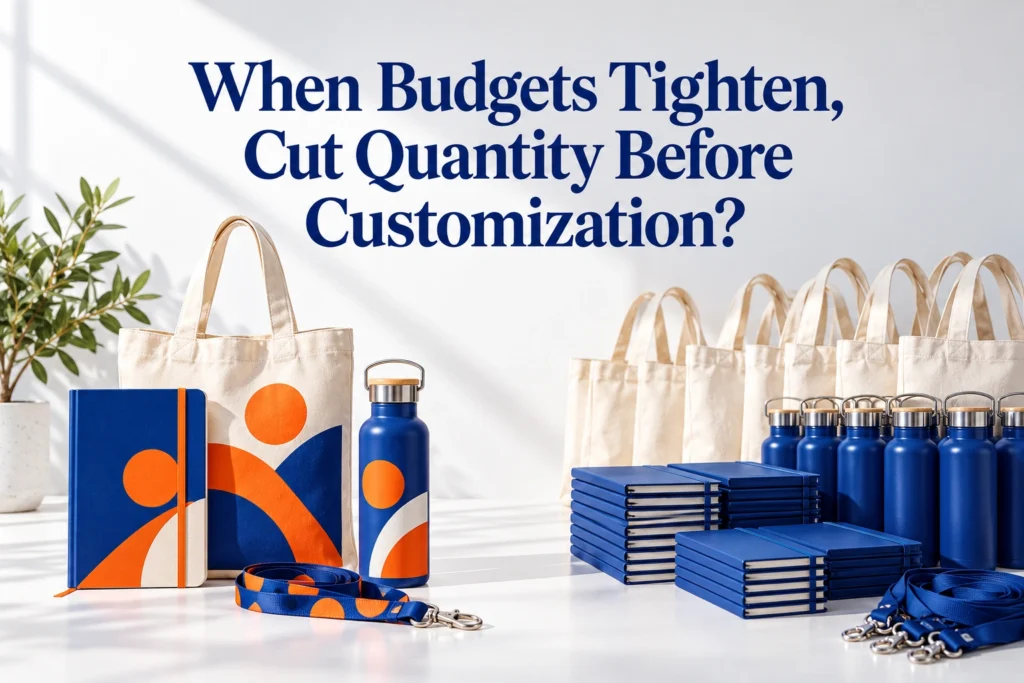
Cut quantity before customization only when customization is what makes each gift relevant and its fixed setup cost is small relative to the budget; otherwise, simplify the customization first. The deciding number is breakeven uplift: how much more valuable a customized gift must be per recipient for fewer customized gifts…
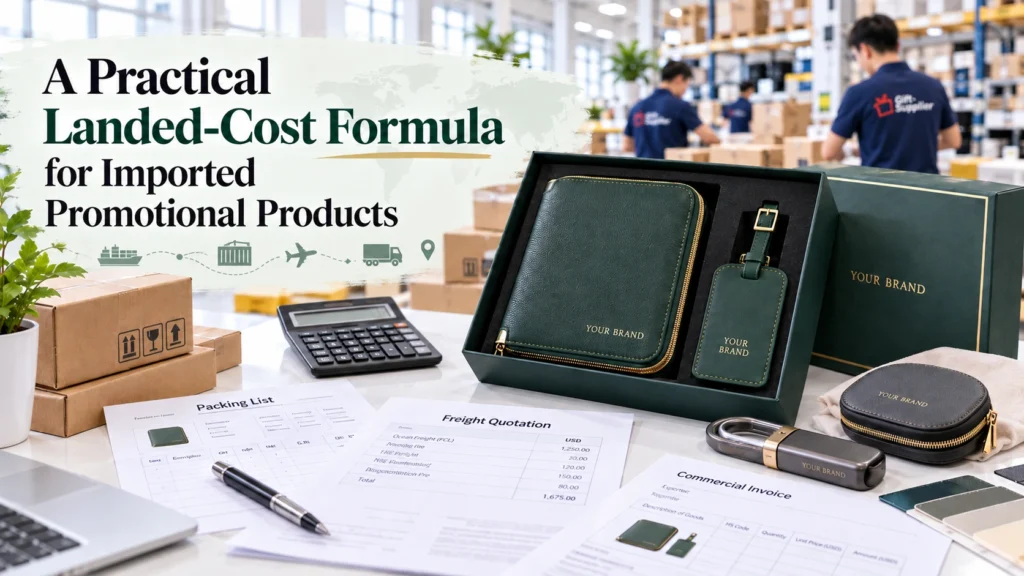
To estimate what imported promotional products really cost, add every charge between the factory gate and your receiving dock to the supplier’s unit price, then add a contingency line before comparing quotes. A promotional product landed cost calculator does exactly this: unit price, decoration, packaging, origin charges, freight, insurance, duties…
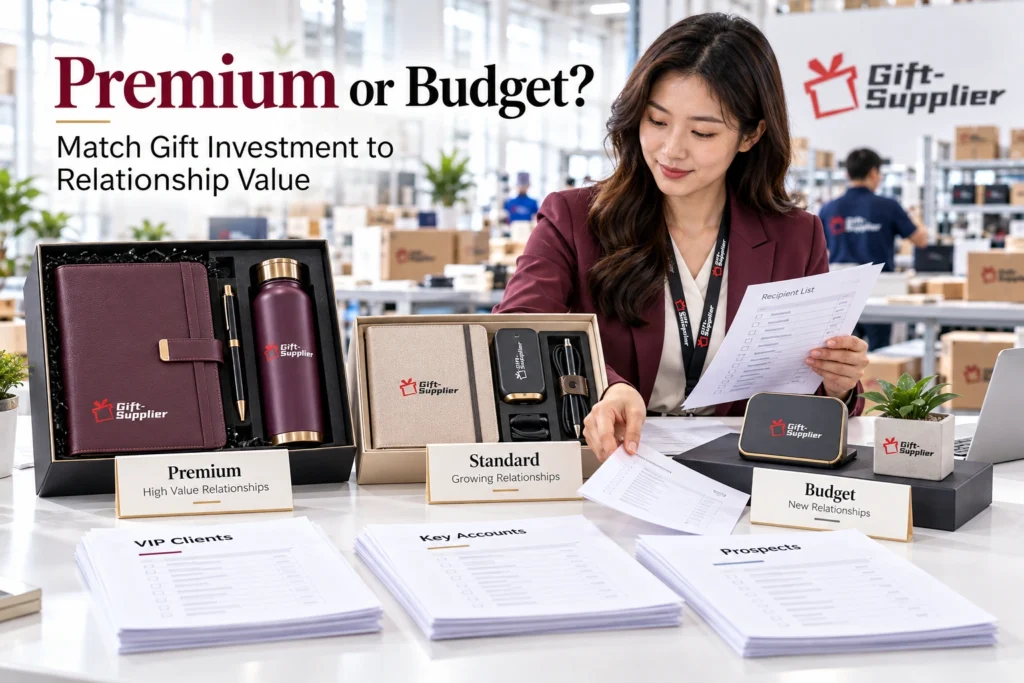
Premium vs budget corporate gifts should be decided by relationship value, not by a flat per-recipient price: score each recipient on a few verifiable factors, group them into two or three tiers, and spend more only where the relationship justifies it. This guide is written for marketing procurement leads running…
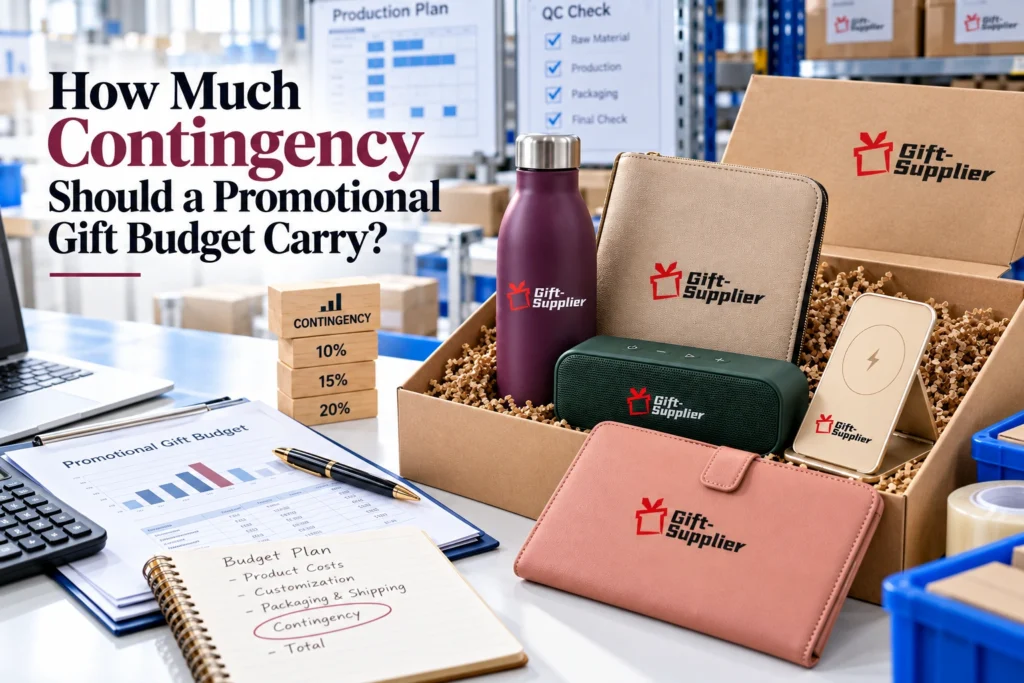
A promotional gift budget contingency should usually sit between roughly 3% and 20% of the landed cost, set by risk band rather than one flat figure. Score four drivers (freight, currency, duties and deadline rigidity) from 1 to 3, convert each score into a percentage, and add them together. This…
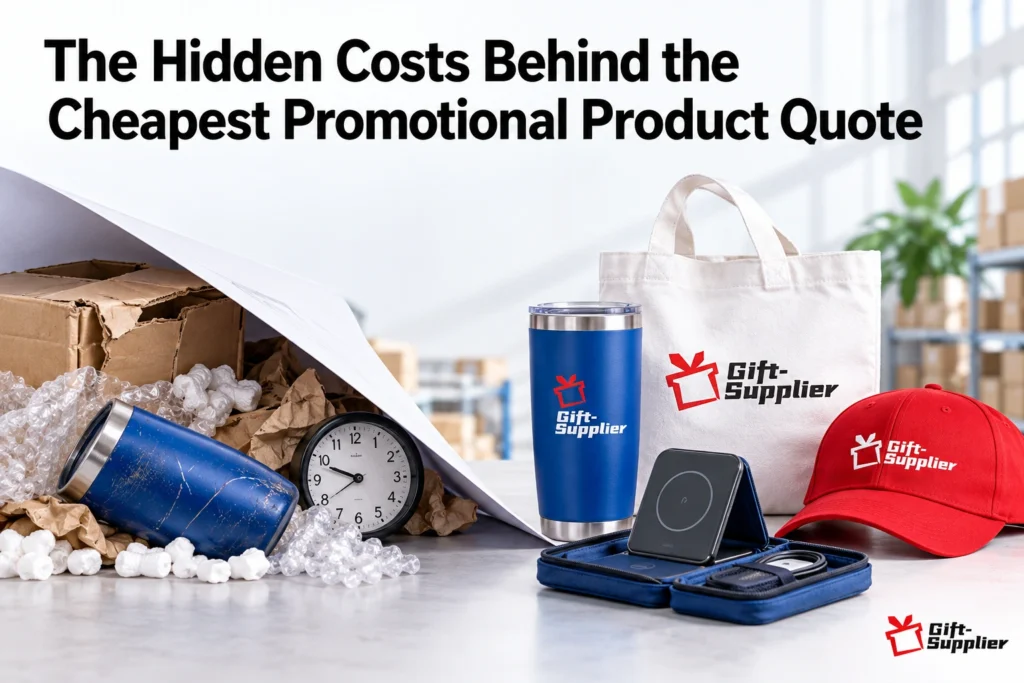
The hidden costs behind a cheap promotional product quote typically come from three places: a higher defect rate that creates rework or replacement costs, an optimistic lead time that risks delay or rush freight, and weak packaging that leads to transit damage. These cheap promotional products hidden costs can turn…
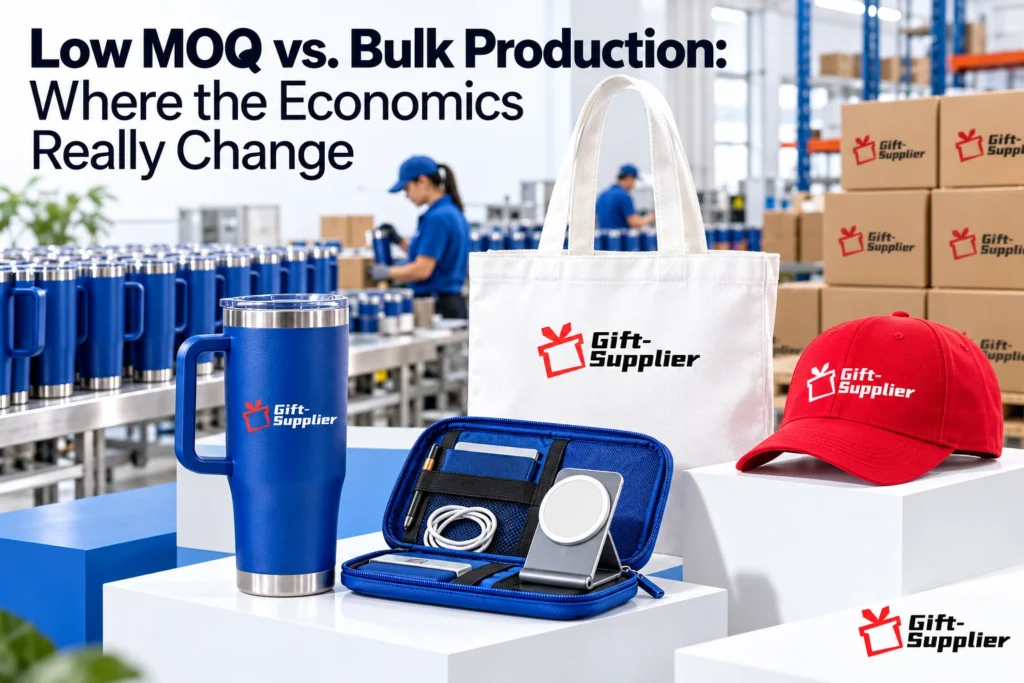
Low MOQ versus bulk production economics really change where two fixed costs — tooling and decoration setup — get spread across very different quantities. In low MOQ vs bulk promotional products, those fixed costs are divided across a small run, so they weigh heavily on the effective unit cost even…
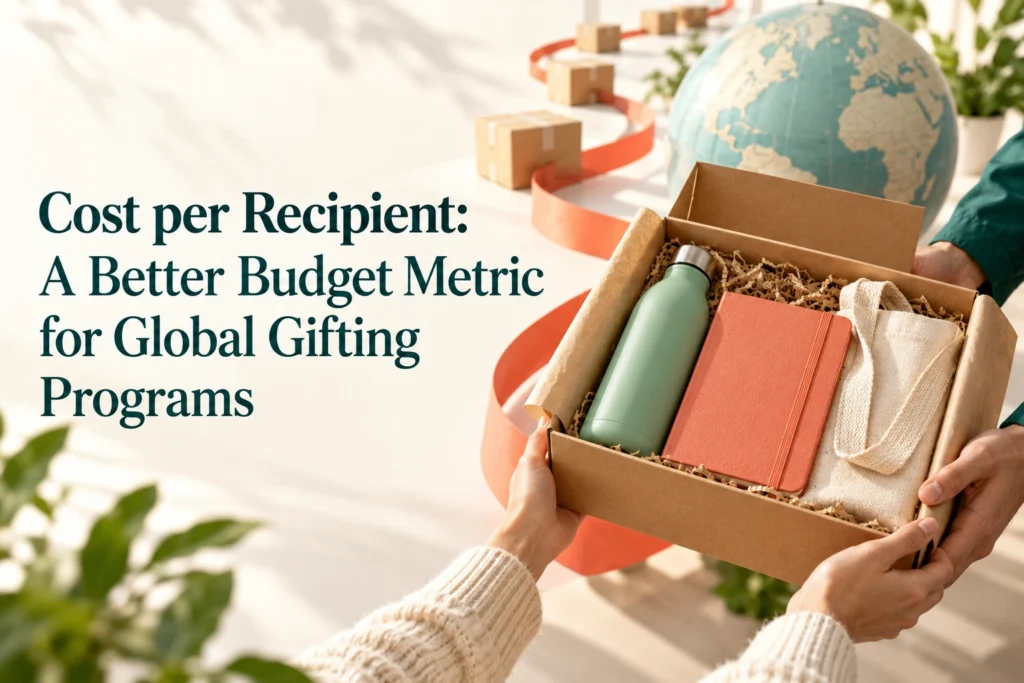
Cost per recipient is total program cost — including unit cost, freight, duties, delivery failure handling, repacking, storage, and unclaimed stock — divided by the number of recipients who actually received the gift, not the number targeted. It is a more accurate budget metric than cost per unit for a…
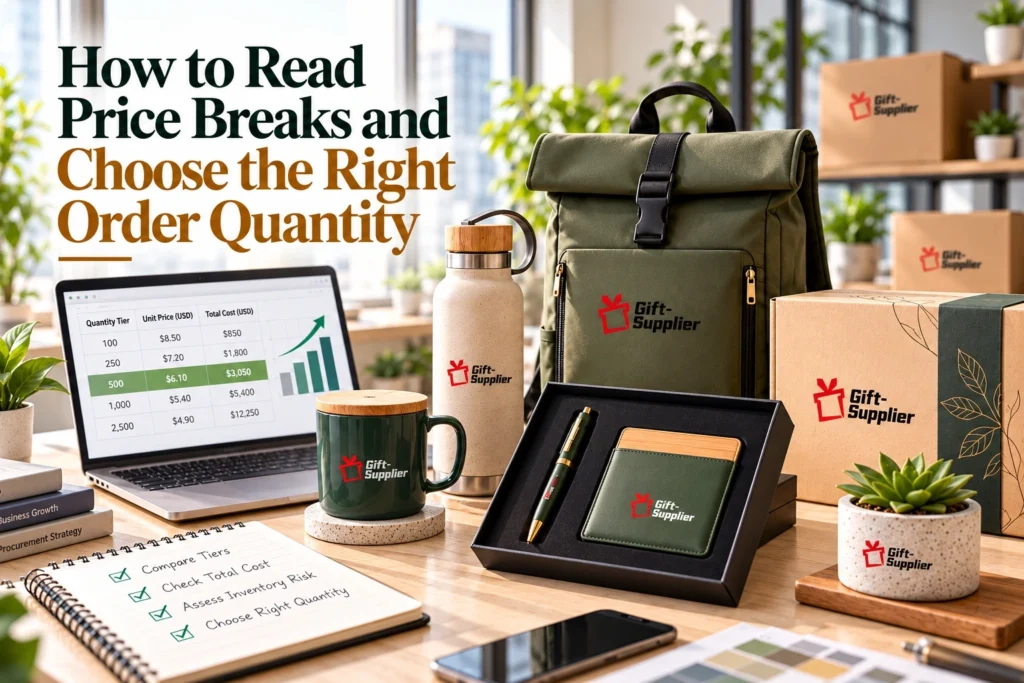
Reading a promotional product price break analysis means comparing the savings on the units you actually need against the real cost of the surplus units required to reach the next tier, including holding cost and the risk that surplus becomes obsolete before you use it. A lower unit price at…
Reduce promotional product costs without lowering quality by changing specification, packaging, and production choices in a deliberate order, rather than cutting quantity or material indiscriminately. Packaging and production changes, such as a more efficient structural format or order consolidation, often reduce cost with little perceived-quality risk. Specification changes, such as…
Allocating a promotional merchandise budget across reach, quality, and experience means splitting total spend into three tiers: hero items for your smallest, highest-value recipient group, scalable items for your largest audience, and a contingency reserve held back for rejects, rush freight, or late additions. This guide is written for marketing…
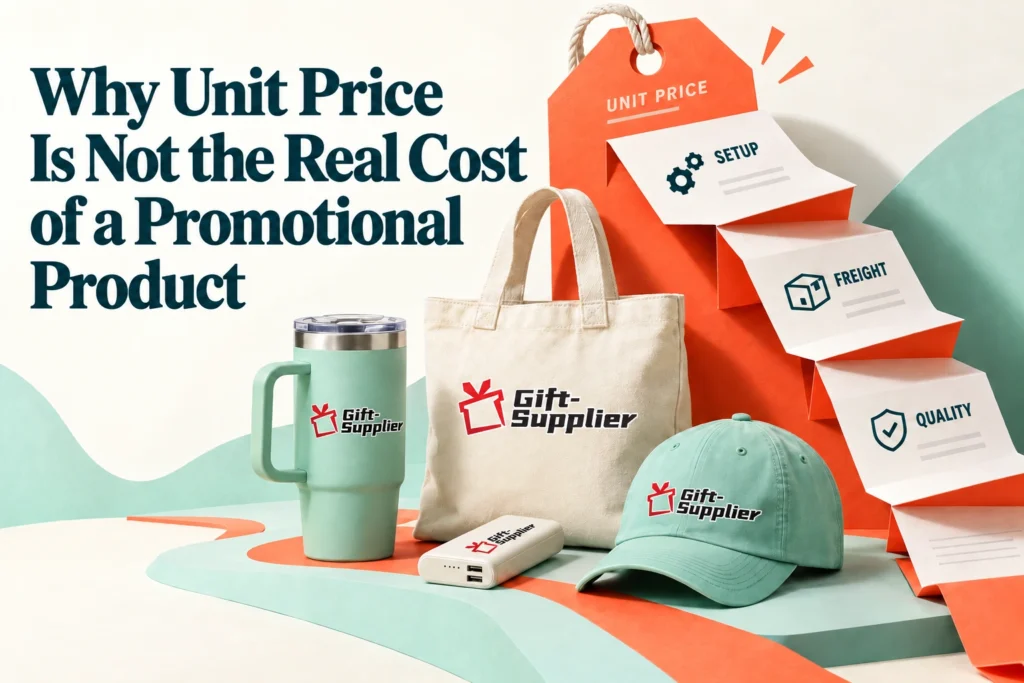
Unit price is not the real cost of a promotional product because it leaves out tooling, setup, testing, freight, duties, rejected units, and the internal time spent handling the order. Promotional product total cost of ownership adds those items together and divides by the units you can actually use. This…
A promotional products procurement policy should connect four elements: brand control, an approved vendor list, budget authority, and compliance requirements. This guide is written for procurement managers building or updating a purchasing policy for branded merchandise across a mid-market or enterprise organization in US and UK markets. It assumes multiple…
A promotional product supplier red flag is any element of a quote that looks complete on the surface but omits the information a buyer needs to verify cost, compliance, or delivery risk before committing budget. The most common promotional product supplier red flags cluster into four groups: vague specifications, unsupported…
A promotional product request for proposal for a multi-market branded merchandise program should cover five areas beyond product specifications: pricing basis, service level requirements, data and reporting expectations, compliance scope by market, and governance and escalation terms. This guide is written for procurement managers running an RFP for a branded…
Whether to single-source or multi-source a promotional product should be decided by two factors: how critical the item is to the program, and how long it would take to recover if the primary vendor failed to deliver. Low-criticality items with fast recovery options are generally safe to single-source for the…
A promotional products procurement scorecard that procurement teams will actually use should weight five KPI categories — quality, delivery, cost, service, and compliance — and combine them into a single weighted score using a defined formula, rather than tracking five unweighted numbers side by side. This guide is written for…
A promotional product sample approval process should move through a defined sequence of approval gates — digital mockup, pre-production sample, production-run verification, and a final golden sample sign-off — with each gate confirming a specific aspect of the order before the next stage proceeds. This guide is written for procurement…
Share your basic product requirements, and our team will review your enquiry and contact you to discuss the next steps.
Have more project details? Complete our full quotation form.