Custom Promotional Gifts • OEM/ODM Manufacturing • Worldwide Delivery

RAISED AND RECESSED BRANDING

Embossing and Debossing for Promotional Products

Create tactile branding on compatible promotional products, leather-look accessories and custom packaging. Compare raised embossing with recessed debossing and review the material, artwork, impression area and finish requirements before production.

Suitable methods depend on the selected material, product construction, artwork detail, impression depth and available branding area.

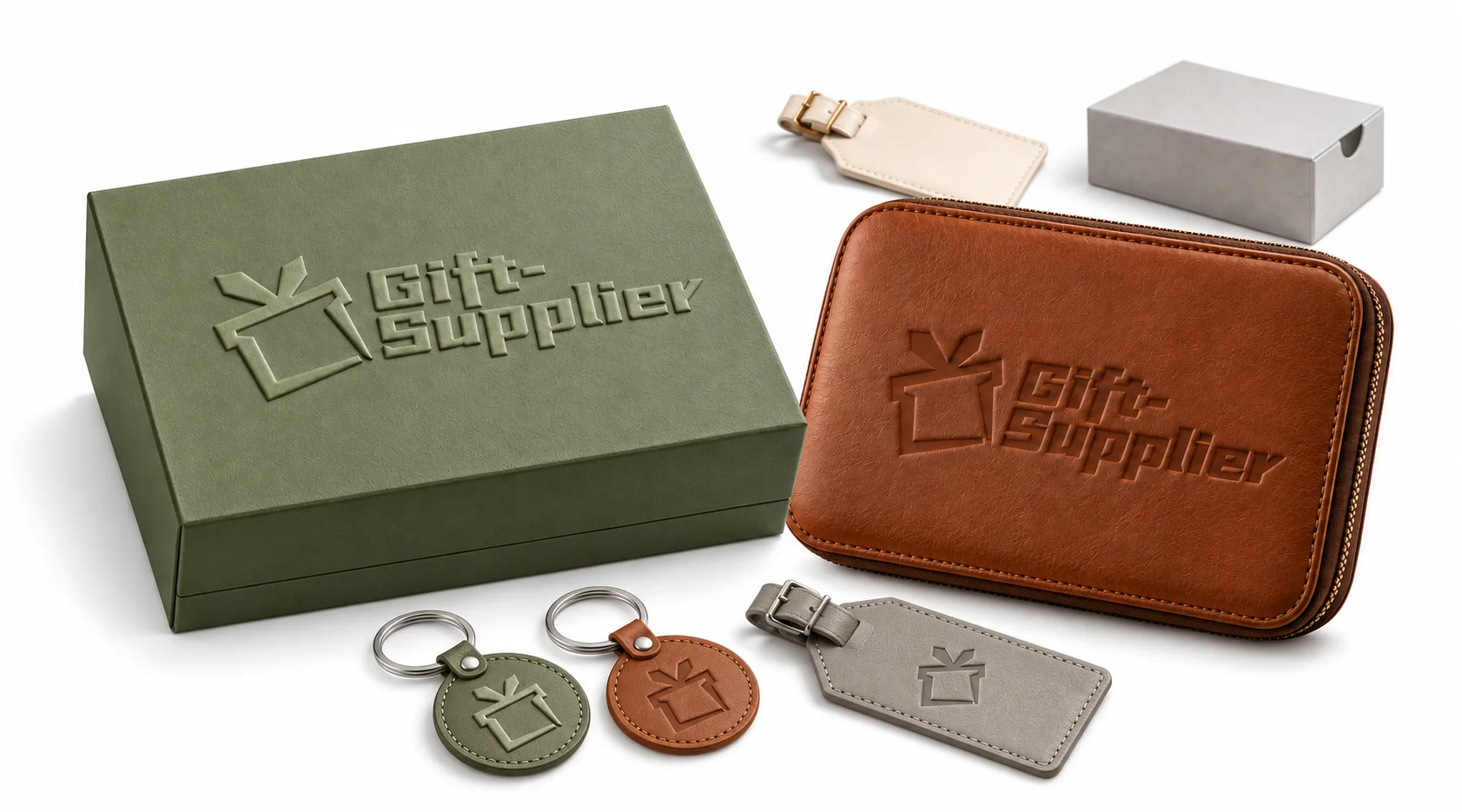
Embossed Gift Supplier logo on a presentation box and debossed logo on a leather-look organizer

METHOD COMPARISON

What Is the Difference Between Embossing and Debossing?

Both methods create tactile branding by applying pressure with a custom tool or die. The main difference is whether the finished logo rises above the surface or is pressed into it.

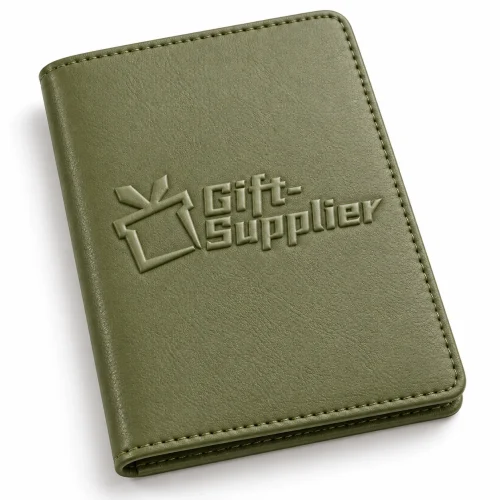
Raised embossed Gift Supplier logo on an olive passport holder

Raised Impression

Embossing

Embossing creates a raised logo or design above the surrounding material. It can add visible dimension to compatible paperboard, packaging sleeves, leather-look accessories and selected soft materials.

Best suited for:

  • Raised tactile presentation
  • Premium packaging details
  • Simple logos and defined shapes
  • Branding intended to catch directional light

Important consideration:
The visible height and edge definition depend on the material, product construction, die design and available impression area.

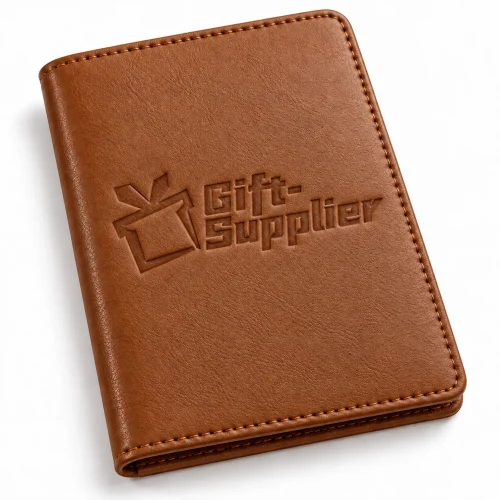
Recessed debossed Gift Supplier logo on a cognac passport holder

Recessed Impression

Debossing

Debossing presses the logo or design below the surrounding surface. It commonly creates a subtle, tactile result on compatible leather-look products, silicone items, paperboard packaging and selected accessories.

Best suited for:

  • Recessed tactile branding
  • Subtle tone-on-tone presentation
  • Leather-look accessories
  • Logos with clear, simplified details

Important consideration:
The visible depth and contrast depend on the material thickness, surface texture, pressure, heat and product structure.

Method-selection note: Embossing and debossing are not interchangeable on every product. Final suitability should be confirmed after reviewing the selected material, product construction, artwork, impression size and desired finish.

PRODUCT AND MATERIAL OPTIONS

Where Embossing and Debossing Can Be Applied

These methods are commonly considered for compatible leather-look materials, silicone products, paperboard accessories and selected packaging components. The product structure and material response must be reviewed before confirming the method.

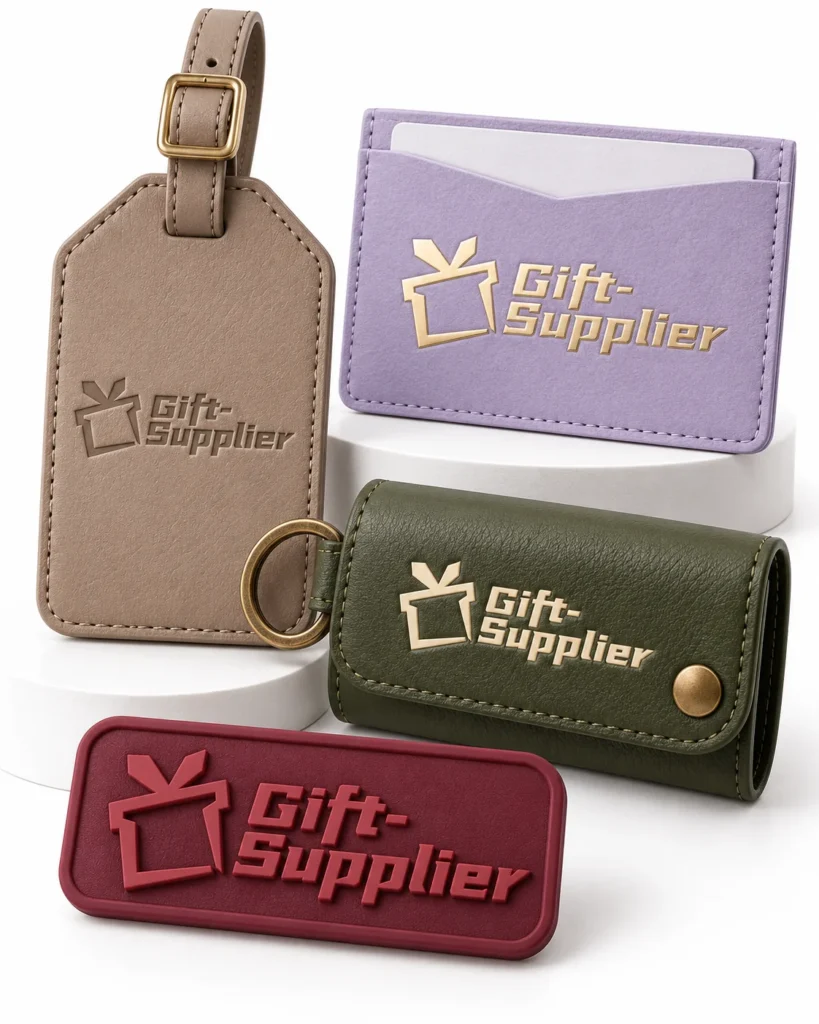
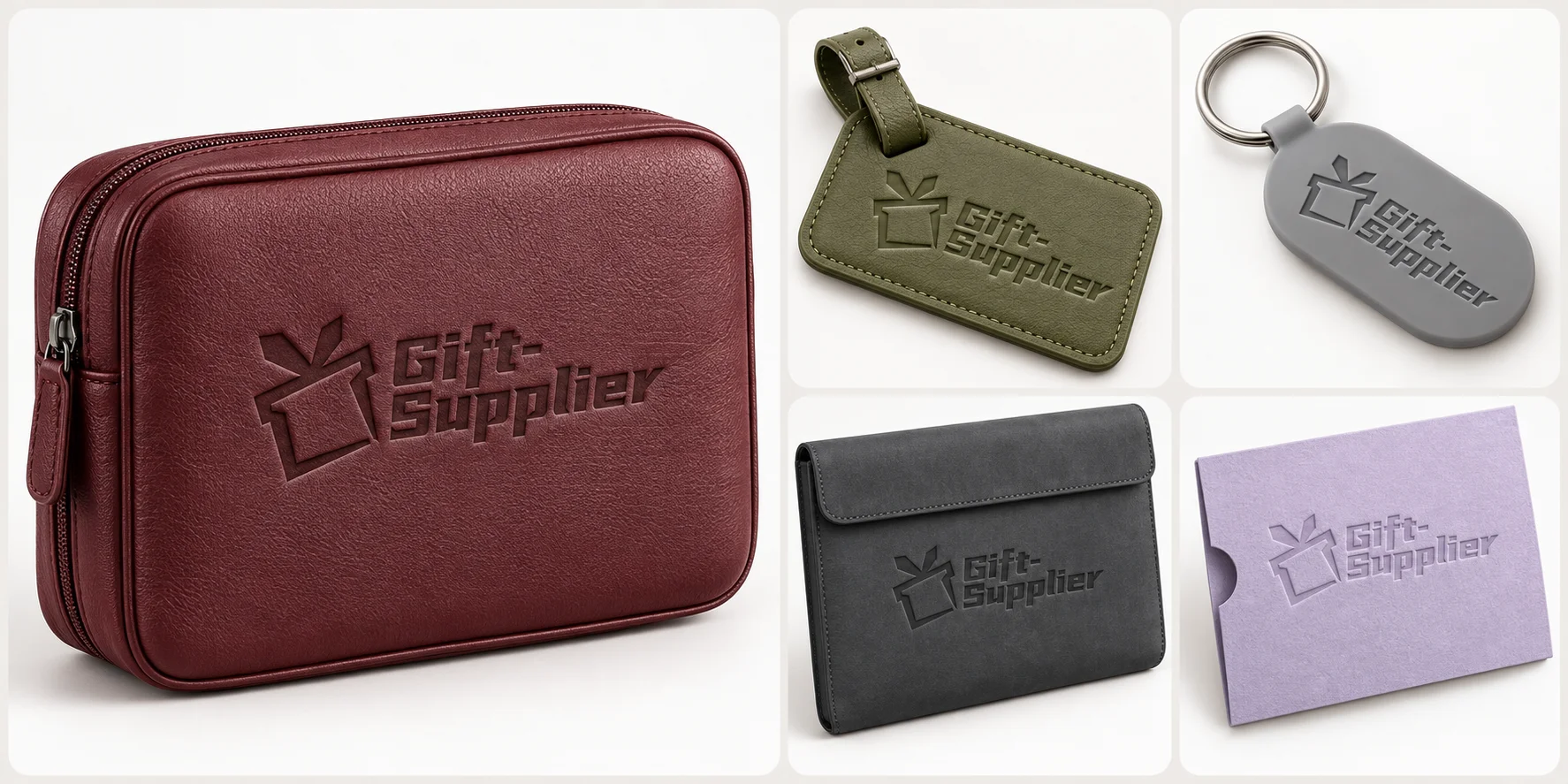
Embossed and debossed Gift Supplier logos on organizers, luggage tags, key fobs, sleeves and packaging

Leather-Look Luggage Tag

Commonly suited to compact debossed logos or selected raised impressions on an accessible front surface.

Embossing or debossing

Silicone Key Fob

Can use a molded raised or recessed logo where the product design, thickness and manufacturing process allow.

Molded raised or recessed detail

Document Sleeve

Suitable for subtle tone-on-tone branding on compatible leather-look surfaces with a clear, accessible front panel.

Commonly debossed

Paperboard Gift Sleeve

Can support raised embossing, recessed debossing or selected foil-filled impressions depending on the paperboard specification.

Embossing, debossing or foil detail

TACTILE FINISH OPTIONS

Choose the Appearance of the Finished Impression

Embossing and debossing can be combined with different visual finishes. Availability depends on the product material, surface coating, artwork, impression method and required production result.

01 — Blind Impression
The logo is raised or recessed without adding ink or foil. The result uses the product’s original surface color for a subtle tone-on-tone appearance.

02 — Foil-Filled Impression
Metallic or colored foil may be combined with selected embossed or debossed impressions to create stronger contrast and a more visible branded finish.

03 — Color-Filled Debossing
Selected recessed impressions may be filled with a compatible color to make the logo more visible against the product surface.

04 — Multi-Level or Textured Impression
Selected materials and artwork may support different impression depths or textured details. Tooling and sampling requirements should be reviewed for the specific product.

Finish-availability note: Not every finish can be applied to every product. Material thickness, coating, heat response, surface texture, artwork detail and production quantity should be reviewed before confirming the finish.

Blind, foil-filled, color-filled and textured Gift Supplier embossing and debossing finishes

ARTWORK AND PRODUCTION PLANNING

What Can Affect the Finished Impression?

The finished result depends on more than the selected method. Review the artwork, material, product construction, impression area and finish requirements before tooling and sampling.

Planning Factor Embossing Consideration Debossing Consideration What to Confirm
Artwork Detail Fine details may lose definition when raised above the surrounding product surface. Fine details may close or become less visible inside a recessed impression. Whether the logo should be simplified
Impression Size Larger raised areas may require additional material, tooling and structural review. Larger recessed areas may require careful pressure control to maintain an even result. Finished logo width and height
Material Thickness The material must support the raised structure without unwanted distortion. The material must accept the recessed impression without unwanted surface damage. Selected product and material
Surface Texture Heavy texture can reduce the visibility of raised edges and fine details. Textured surfaces can reduce the contrast and clarity of recessed details. Desired visibility and finish
Product Construction Seams, padding, lining and internal components may restrict the available impression area. Internal reinforcement, closures and product shape may limit access for pressing. Exact branding position
Color or Foil Finish Foil or color may require a separate process after the raised impression is formed. Selected recessed impressions may support foil or color filling where compatible. Blind, foil-filled or color-filled result
Tooling A custom die or production tool may be required for the selected artwork and product. A custom die or production tool may also be required to create the recessed impression. Tooling cost, ownership and possible reuse
Sampling A physical sample helps review impression height, edge definition and surface response. A physical sample helps review impression depth, contrast and material compression. Required approval route

Production-planning note: A digital mockup can confirm approximate artwork position and scale, but it cannot fully demonstrate impression depth, material response, tactile texture or foil reflection. Use an agreed physical sample or finish reference where these details are important.

REVIEW AND APPROVAL

From Artwork Review to Production Confirmation

Embossing and debossing projects require the product, material, artwork, impression method and finish to be reviewed together before bulk production.

Initial Review

Product and Material Review

Confirm the selected promotional product, material, surface construction, required quantity and intended branding position.

Method Selection

Method and Finish Assessment

Review whether embossing, debossing, blind finishing, foil application or color filling is suitable for the selected product.

Production Setup

Artwork and Tooling Preparation

Prepare the approved logo at the required dimensions and review the custom die, mold or tooling requirements for production.

Physical Review

Physical Sample Review

Where required, assess impression height or depth, logo position, edge definition, material response, foil registration and overall appearance.

Final Confirmation

Production Reference Confirmation

Confirm the product, artwork, impression dimensions, position, finish, quantity, packaging and approved sample or finish reference before production.

Approval clarification: A digital layout can confirm the intended logo position and approximate size, but the tactile result should be assessed using an agreed physical sample or finish reference where impression depth, raised height, texture, foil or material response is important.

COMMON QUESTIONS

Embossing and Debossing FAQs

Find practical answers about method selection, compatible materials, artwork, finishes, tooling, sampling and production planning.

Embossing creates a raised impression above the surrounding material, while debossing creates a recessed impression pressed below the surface. The suitable method depends on the selected product, material, construction and intended appearance.

These methods may be suitable for leather-look organizers, luggage tags, document sleeves, silicone accessories, paperboard gift sleeves and selected packaging components. Compatibility must be reviewed for the specific product and material.

The logo may need to be simplified if it contains very fine lines, small lettering, narrow gaps or complex details. Clear artwork with suitable spacing generally produces better edge definition.

Selected products may support foil-filled, color-filled or printed details combined with embossing or debossing. Availability depends on the material, surface coating, impression method and production process.

A custom die, mold or production tool may be required to create the raised or recessed logo. Tooling requirements, cost, ownership and possible reuse should be confirmed for the specific project.

Bulk production should be reviewed against the approved artwork, position and agreed finish reference. Minor visual differences may occur because materials, coatings, textures and physical product surfaces can vary.

A digital mockup can show the intended logo position and approximate size, but it cannot fully represent impression depth, raised height, tactile texture, material response or foil reflection.

A customized sample or finish reference may be arranged depending on the selected product, material, tooling and project requirements. Sampling availability, cost and preparation time should be confirmed before ordering.

Pricing may be affected by product material, artwork complexity, impression size, tooling requirements, finish selection, order quantity, sampling and packaging requirements.

Provide the selected product or reference image, logo artwork, required quantity, preferred method, impression size, branding position, finish direction, packaging requirements and delivery destination.

START YOUR TACTILE BRANDING PROJECT

Ready to Compare Embossing and Debossing for Your Products?

Share your product reference, logo artwork, estimated quantity, preferred raised or recessed effect, finish, branding position, packaging needs and delivery destination. Our team will review material compatibility, tooling and sampling requirements before recommending the next step.

Request a Quick Quote

Share your basic product requirements, and our team will review your enquiry and contact you to discuss the next steps.

Have more project details? Complete our full quotation form.