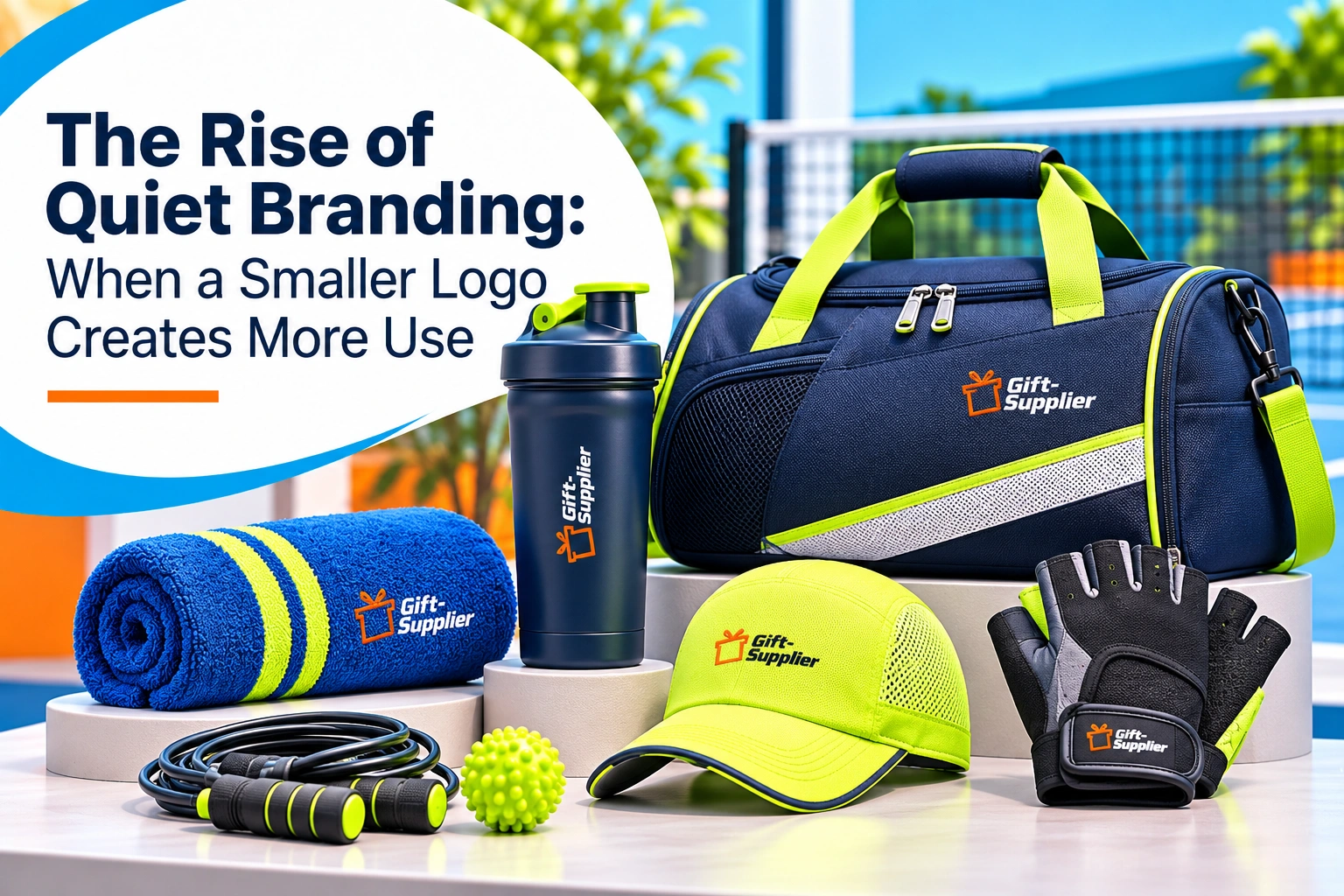
A smaller logo can increase use when the product is something the recipient already wants to keep in sight: a notebook on a desk, a bottle in a gym bag, a pouch in a travel kit. Subtle branding promotional products work because they lower the “billboard cost” of carrying the item, so people keep it longer and treat it as their own. This guide is written for brand managers choosing a logo treatment for B2B corporate gifts, with assumptions dated 19 November 2026. It assumes a decorated, mid-premium item, an order that passes through artwork approval, and recipients who choose whether to use it. It does not promise a specific retention result.
Quiet branding is not “no branding”. The aim is to place a reduced, well-made mark where the recipient will see it often, and to let material and finish carry the quality signal. Below you will find a decision table for choosing a treatment, a practical way to rewrite brand standards so smaller marks are pre-approved, a six-step artwork approval process, a worked scorecard, a buyer checklist and FAQs. Throughout, the focus is on how product customization choices affect retention and perceived value, so that subtle branding promotional products earn a place in daily use rather than a drawer.
Scope, Market and Assumptions
Every recommendation in this guide depends on the assumptions in Table 1. If your situation differs, adjust the decision criteria rather than copying the conclusions.
| Item | Assumption used in this guide | Limitation or how to verify |
| Buyer and decision owner | Brand Manager at a B2B company running client, partner or employee gifting, with Procurement involved in sourcing | Smaller teams may combine roles; keep one named approver for artwork approval |
| Market | Overseas B2B buyers sourcing decorated promotional gifts | Region-specific labelling, packaging or advertising rules are not covered |
| Product class | Everyday-use items suited to product customization, such as notebooks, drinkware, tech accessories, bags and apparel | Regulated or safety-critical products need separate compliance review |
| Evidence basis | Design principles on brand standards, an artwork approval example and an illustrative scorecard | No measured retention statistics are claimed; test with your own recipients |
| Price, MOQ and lead time | Deliberately not stated | Vary by product, factory and method; confirm in a scoped quote |
| Current buyer priority | Perceived value, durable use and fewer wasted items | If your priority is mass awareness, a larger mark may suit better |
| Review date | 19 November 2026 | Revisit when brand standards, products or decoration options change |
Why Subtle Branding Promotional Products Tend to Earn More Use
Three mechanisms explain why a reduced mark can raise everyday use. Each one is something a brand manager can test rather than assume.
Identity fit. People keep using items that look like their own choices. An oversized logo turns a notebook into an advertisement the recipient must agree to carry. A smaller mark lets them adopt the item while the brand still appears every time it is picked up.
Perceived value. Restraint often reads as confidence. With subtle branding promotional products, material, finish and decoration method carry the quality signal, so the item feels closer to a purchased product than a giveaway, which supports retention.
Context fit. An item that suits client meetings, flights and home offices is seen in more settings, and by more of the right people, than one left in a drawer because it is too loud for those places.
The trade-off is real. A quieter mark delivers less visibility per sighting, so the benefit only appears if extra days in use and extra sightings outweigh it. A simple planning model is: total brand exposure ≈ visibility per sighting × sightings per week × weeks in use. This is a planning aid, not a measured result. Replace each term with your own data, for example a 30-day and 90-day pulse question asking whether the item is still used and where.
Decision Table: Choosing a Logo Treatment on the Visibility Spectrum
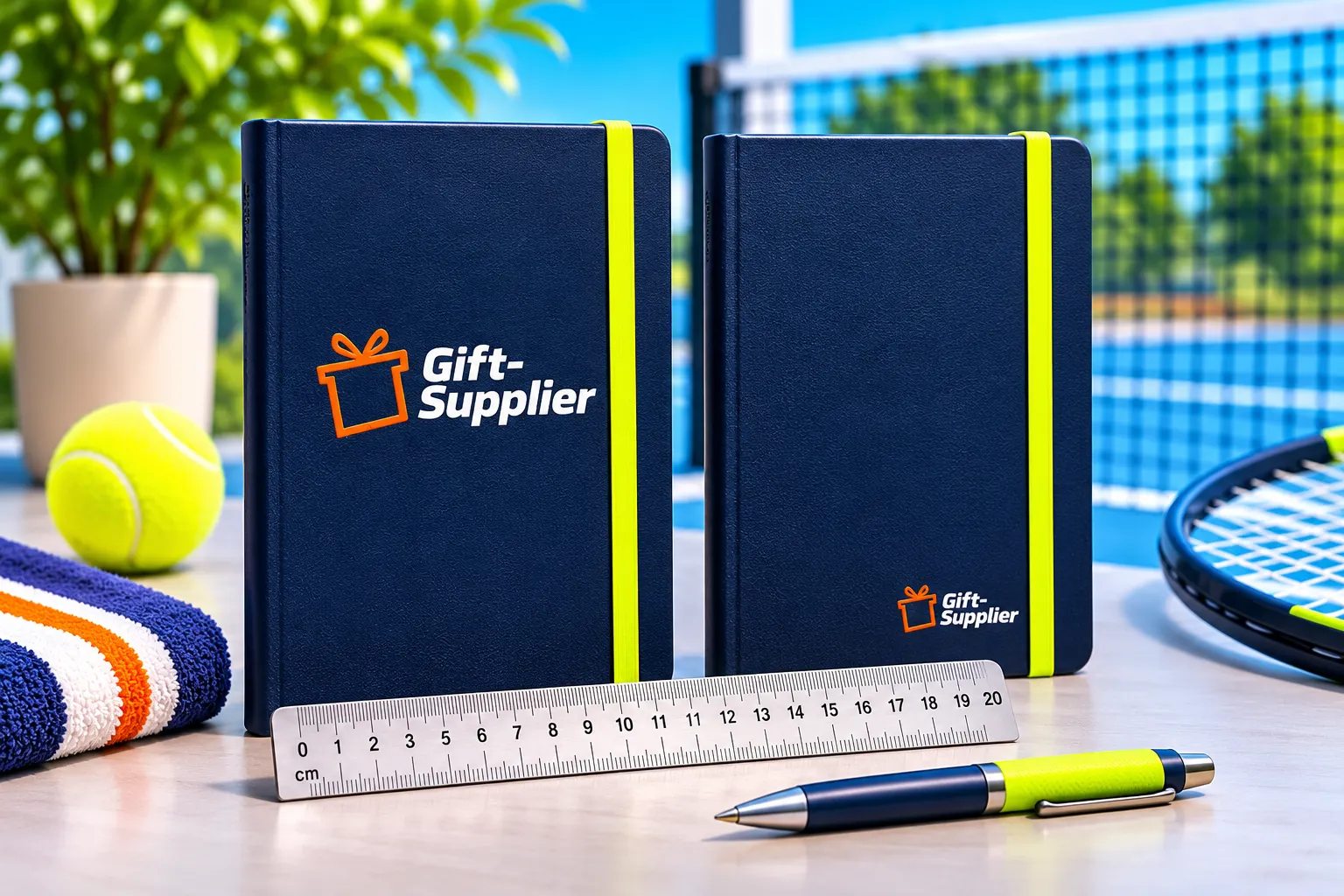
Subtle branding promotional products sit on a spectrum, not in a single style. Table 2 compares five treatments using criteria a buyer can verify on a sample. For first mockups only, some teams test logo-width brackets such as roughly 60–100% of the available imprint width for a hero logo, 30–55% for a reduced logo and 10–25% for a quiet mark. These are illustrative starting values, not industry standards; the right scale depends on the product, the decoration method and legibility on the physical sample.
| Treatment | Visibility | Best-fit use | Main risk | Evidence to request |
| Hero logo | Readable from several metres | Event giveaways, wayfinding, mass awareness | Lowest brand standards risk, but the item may be left unused | Mockup at full scale; stated recipient use case |
| Reduced logo | Readable at arm’s length and across a desk | Notebooks, drinkware and tech accessories for clients and staff | Needs a documented reduced-size rule in brand standards | Physical sample showing minimum line weight |
| Icon-only or monogram mark | Recognised by people who already know the brand | Established brands with a recognisable symbol | Brand standards may not allow a symbol without the wordmark | Written exception or approved lockup file |
| Tone-on-tone or blind mark | Noticed on close inspection; depends on light | Premium gifts, leather-look and fabric goods | Can disappear on dark or textured surfaces; hard to judge on screen | Pre-production sample for artwork approval in normal lighting |
| Hidden brand moment (lining, underside, insert card, packaging) | Seen when the item is opened or turned over | Executive gifts, kits, unboxing experiences | Brand may be absent from the product itself | Packaging and placement proof |
MOQ, lead time and unit price are intentionally absent from Table 2. They differ by product, factory and decoration method, so request them in a scoped quote rather than relying on a universal figure. Whichever treatment you pick, confirm it against your brand standards and the artwork approval checkpoints later in this guide.
How Product Customization Choices Change Perceived Value
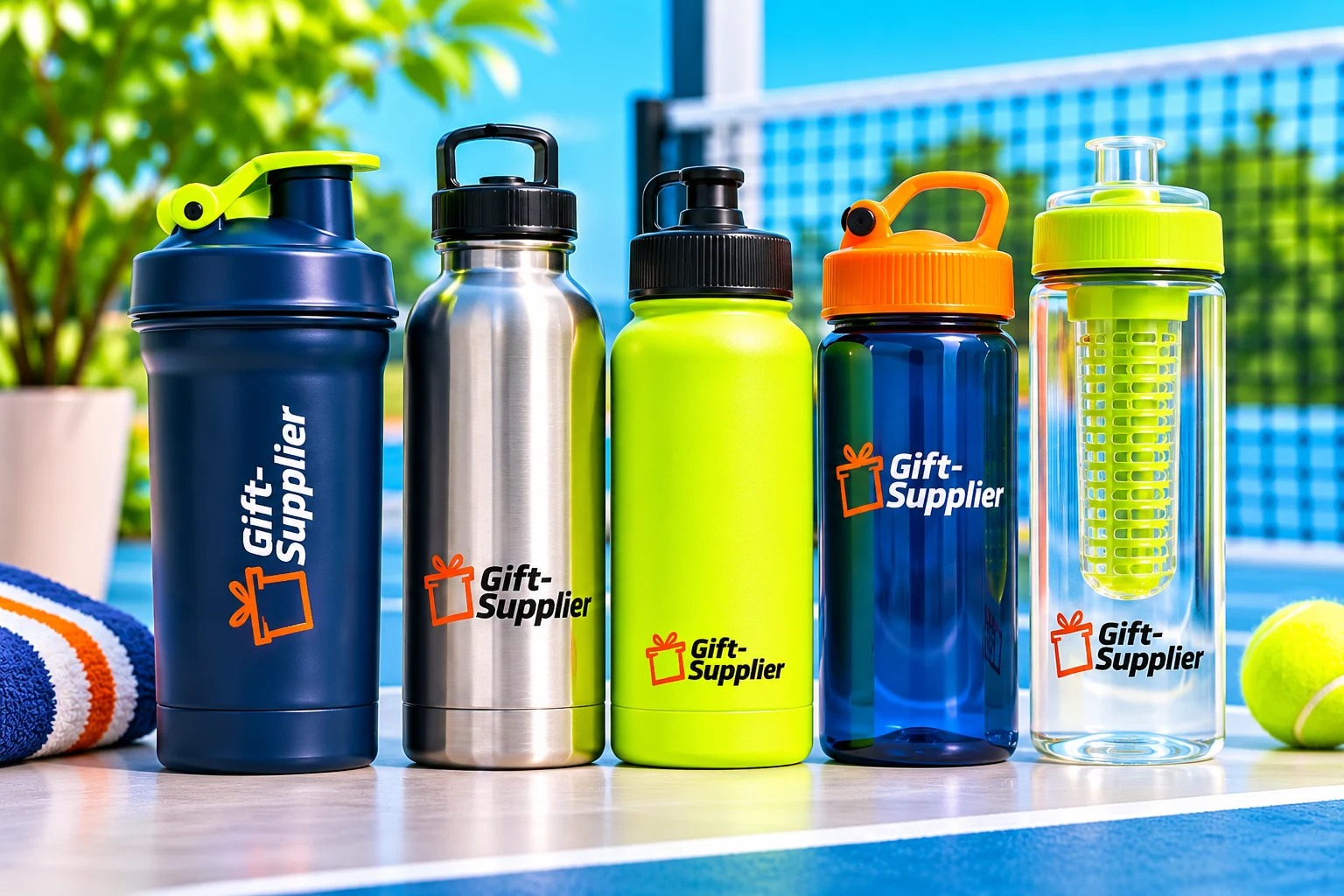
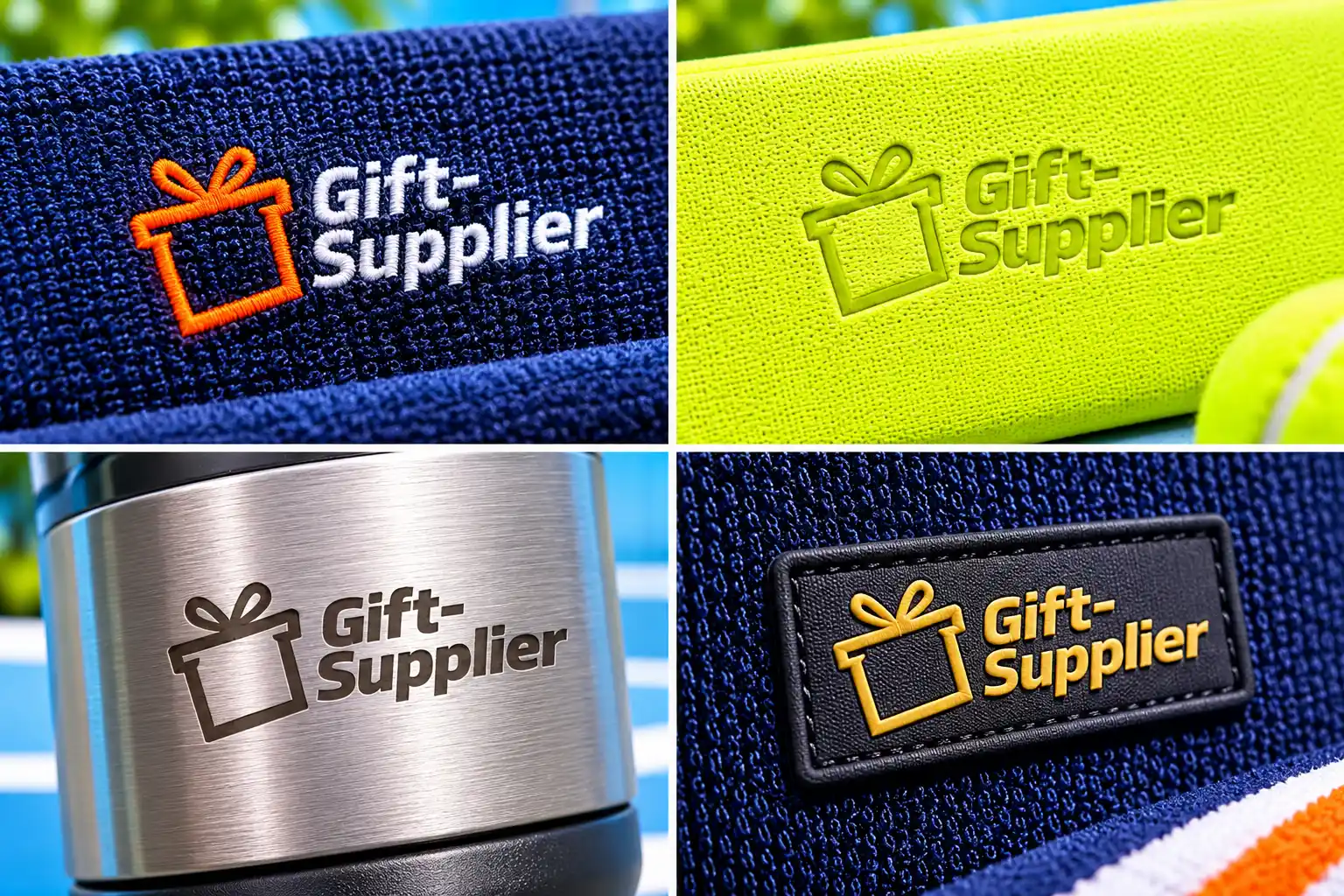
Product customization is where a smaller logo either looks premium or looks like an afterthought. The same artwork can feel very different depending on the method, the surface and the placement. Table 3 summarises how common methods behave for quiet marks. Treat the notes as hypotheses to confirm on a sample, since results depend on material, factory equipment and artwork detail.
| Method | Typical product fit | Perceived-value effect | Main risk | Field to request |
| Blind deboss or emboss | Notebooks, cases, leather-look covers | Understated and tactile; feels crafted | Depth and surface vary; hard to judge from a flat mockup | MOQ, lead time and tooling in quote |
| Laser engraving | Metal drinkware, bamboo, tech accessories | Crisp, permanent look at small sizes | Contrast depends on material finish | Engraved sample on the actual finish |
| Tone-on-tone embroidery | Caps, bags, apparel | Textile feels branded without colour contrast | Thin strokes can close up; thread colour matching | Stitch-out sample and thread reference |
| Small-format print | Plastics, ceramics, pens | Flexible colour at small sizes | Fine lines can blur; colour drift against brand standards | Colour reference and print proof |
| Small foil stamp | Notebooks, cards, packaging | Quiet shine can signal quality | Foil reflects inconsistently; limited substrates | Foil swatch and sample |
| Woven label or small tag | Apparel, bags, pouches | Familiar quality cue in garments | Placement and stitching quality are visible | Label proof and attachment detail |
Rewriting Brand Standards So a Smaller Logo Is Pre-Approved
Quiet branding most often stalls at the guideline stage, not in the factory. If brand standards only define a full-size lockup, every smaller treatment becomes a one-off exception that needs negotiation. The fix is to add merchandise-specific rules before the next order. Table 4 lists the elements to define.
| Element | Typical existing rule | What to add for subtle branding promotional products | Decision owner |
| Minimum size | Minimum width for the full lockup in print | Minimum width and minimum line weight for each decoration method, validated on a sample | Brand Manager |
| Clear space | Margin around the logo | Reduced clear space for small marks on curved or narrow surfaces | Brand design lead |
| Colour | Primary palette | Approved tone-on-tone, one-colour and reversed versions with colour references per material | Brand Manager |
| Approved versions | Primary lockup only | Pre-approved icon-only and reduced-lockup files | Brand Manager, with legal where needed |
| Placement zones | Often unspecified | Preferred and prohibited zones per product type, such as front-cover corner, base or side | Brand design lead |
| Exceptions | Ad hoc email approval | One documented exception route with a named approver and a record | Brand Manager |
Updating brand standards this way speeds up artwork approval, because the supplier’s artwork team can check a file against written rules instead of waiting for an opinion. It also keeps product customization decisions consistent across suppliers and repeat orders.
A Six-Step Artwork Approval Process for Quiet Marks
The six steps in Table 5 turn the decision into a repeatable workflow. Each step has a named decision owner, so artwork approval does not stall while everyone assumes someone else is responsible. When you are ready to test a treatment on a real product, the product customization page at gift-supplier.com explains how mockups and sample rounds are handled on the supplier side.
| Step | Action | Decision owner | Output |
| 1 | State the goal (retention, perceived value or reach) and the recipient’s use context | Brand Manager | One-sentence brief |
| 2 | Choose a treatment from the spectrum in Table 2, with a reason | Brand Manager with Procurement | Selected treatment and fallback |
| 3 | Check brand standards and prepare vector artwork for the reduced or icon version | Brand design lead | Approved artwork file and colour references |
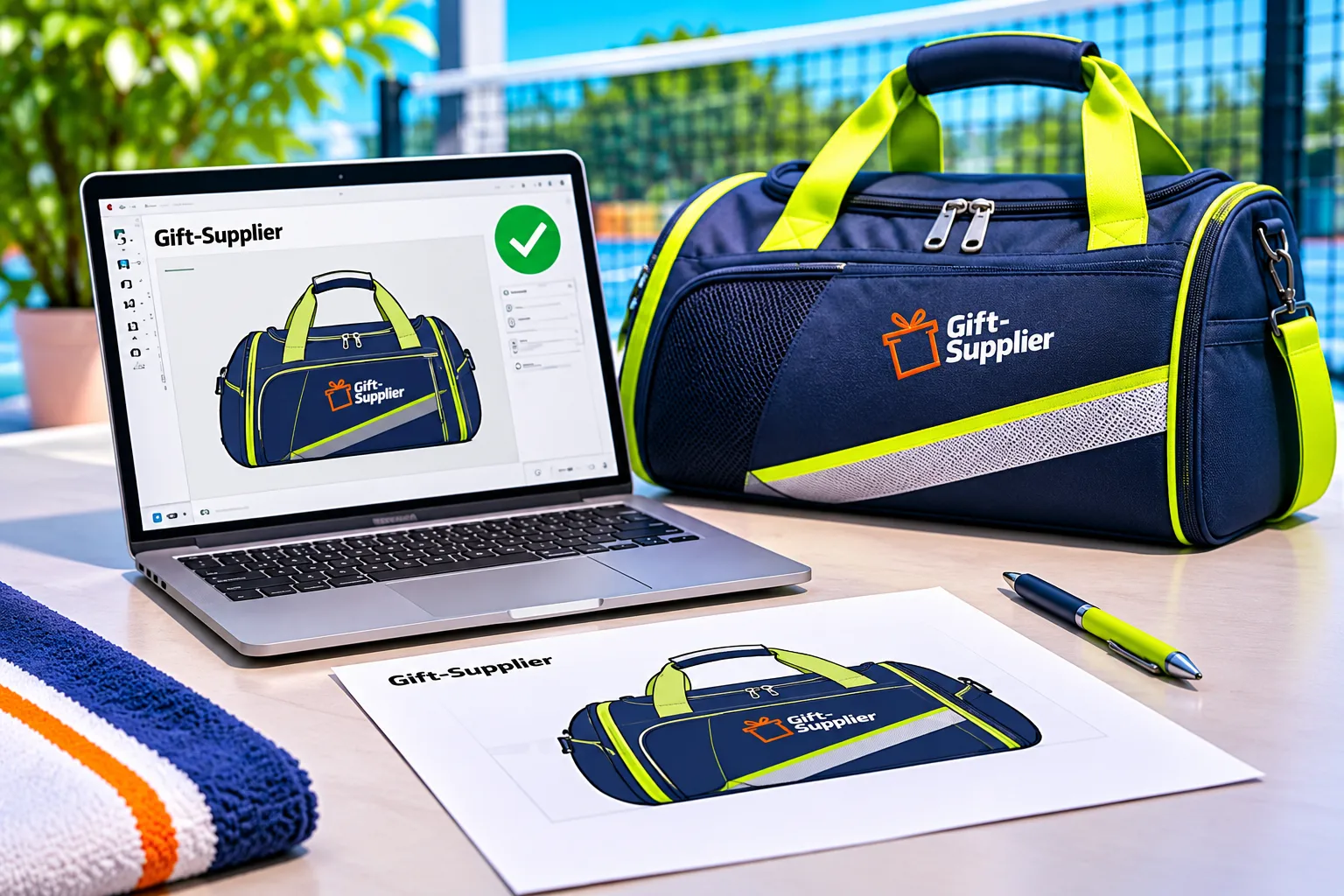
| 4 | Review a virtual mockup of the product customization at actual scale on the real product | Brand Manager and supplier artwork team | Marked-up mockup or sign-off |
| 5 | Inspect a physical pre-production sample for artwork approval at arm’s length and in normal lighting | Brand Manager, with QA input | Written sample approval |
| 6 | Lock the specification and store files for repeat orders | Procurement | Spec record under change control |
Evidence Block: An Illustrative Sample Specification and Scorecard
The examples below are illustrative and anonymised. They show the level of detail a brand manager should expect in a quote or sample record, including the brand standards and artwork approval references, and they are not reported results.
| Field | Illustrative entry |
| Product | Softcover notebook with elastic closure (example item) |
| Recipient and use | Client gift used at the desk and in meetings |
| Treatment chosen | Reduced logo, lower right of the front cover |
| Logo scale | About 40% of imprint width (test bracket, to be confirmed on the sample) |
| Product customization method | Blind deboss, single depth, no ink |
| Artwork file | Vector file of the approved reduced lockup, per brand standards |
| Colour reference | Not applicable to the mark; cover colour matched to an approved swatch |
| Artwork approval gates | Virtual mockup, then physical pre-production sample, then written sign-off |
| Evidence to request | Sample photographed beside a ruler; close-up under side light |
| MOQ, lead time and price | Per scoped quote; not stated here |
| Date stamp | Assumptions reviewed 19 November 2026 |
Weighted scorecard worked example
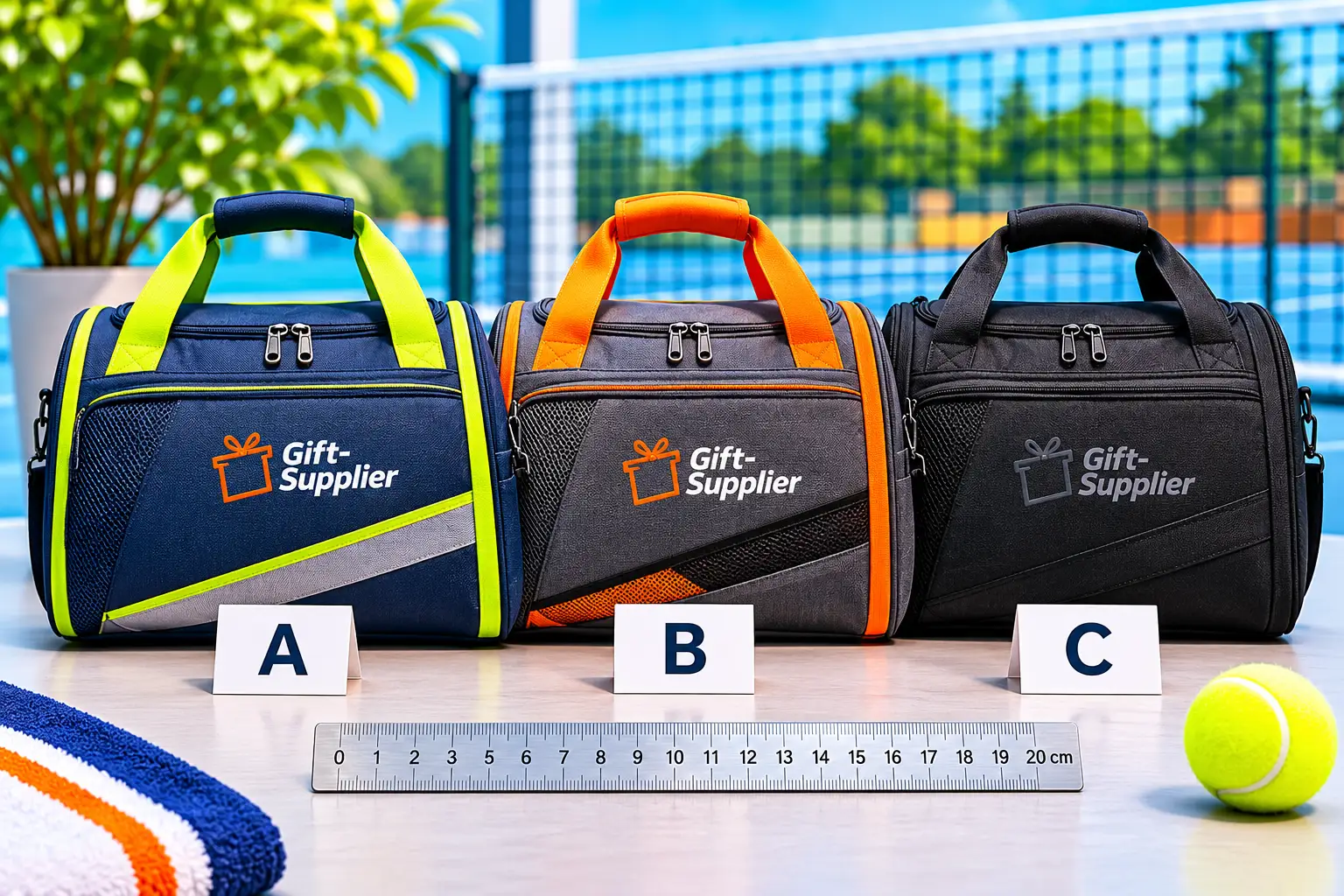
A scorecard keeps the debate about logo size anchored to criteria. Set the weights first, score each option from 1 (weak) to 5 (strong) on a physical sample, then multiply and add. For the risk row, a higher score means lower production and artwork approval risk.
| Criterion | Weight | A: Hero logo | B: Reduced logo | C: Tone-on-tone | What it measures |
| Recognition at distance | 25% | 5 | 4 | 2 | How quickly the brand is identified |
| Perceived value | 25% | 3 | 4 | 5 | How premium the item feels |
| Likelihood of everyday use | 30% | 2 | 4 | 5 | Willingness to keep and carry it |
| Production and artwork approval risk | 20% | 5 | 4 | 3 | Ease of consistent reproduction |
| Weighted total | 100% | 3.60 | 4.00 | 3.85 | Sum of weight × score |
In this example, the reduced logo totals 4.00 against 3.60 for the hero logo and 3.85 for the tone-on-tone mark. The method matters more than the numbers: change the weights and the ranking can change. If recognition is weighted at 50%, perceived value at 15%, everyday use at 20% and risk at 15%, the hero logo totals 4.10 and the reduced logo 4.00. Agree the weights before anyone sees the samples.
Buyer Checklist for Subtle Branding Promotional Products
Use Table 8 before approving any order of subtle branding promotional products. Each line has a pass criterion a colleague can verify, so approval does not depend on taste alone.
| Check | What good looks like | Owner |
| ☐ Goal is written down | One sentence names retention, perceived value or reach as the lead objective | Brand Manager |
| ☐ Recipient use context is clear | The item has a named setting (desk, travel, gym) where the mark will be seen | Brand Manager |
| ☐ Treatment is justified | Chosen from Table 2 with a reason and a fallback | Brand Manager |
| ☐ Brand standards cover the version | Reduced, icon or tone-on-tone artwork is pre-approved or has a documented exception | Brand design lead |
| ☐ Artwork approval file is production-ready | Vector file with colour references and minimum line weight noted | Brand design lead |
| ☐ Virtual mockup reviewed at scale | Mockup shows the real product and real mark size | Brand Manager |
| ☐ Physical sample inspected before artwork approval | Checked at arm’s length and in normal lighting before sign-off | Brand Manager and QA |
| ☐ Product customization method fits the material | Method, depth and size have been tested on the actual surface | Brand design lead |
| ☐ Specification is recorded | Final spec and files stored under change control for repeat orders | Procurement |
| ☐ Feedback is planned | A 30-day and 90-day pulse question is scheduled | Brand Manager |

Upload Your Logo or Request a Virtual Mockup
The most useful next action is to see your own mark at a smaller scale on a real product. Upload your logo and request a virtual mockup so you can compare a reduced treatment against your current one before artwork approval. Send your brand standards with the request, plus any product customization preferences, and ask for a review of whether a reduced or icon-only version is already covered.
Frequently Asked Questions
How small can a logo be on subtle branding promotional products before it stops working?
There is no universal minimum. It depends on the product customization method, the material and the line weight of the artwork. Ask the supplier for the minimum line weight for your chosen method and confirm it on a physical sample.
Do subtle branding promotional products reduce brand awareness?
It can reduce visibility per sighting. The aim is to offset that with longer use and more sightings, so measure both with a 30-day and 90-day recipient question rather than assuming the result.
Can a reduced mark comply with our brand standards?
Yes, if your brand standards include a pre-approved reduced, icon-only or tone-on-tone version. If not, document an exception with a named approver and update the standards afterwards.
Who should approve artwork on a quiet-branded product?
Name one decision owner, typically the Brand Manager, with Procurement recording the final specification. Having several informal approvers is the most common cause of artwork approval delays.
What should I send to get a virtual mockup?
Send vector artwork (for example AI, EPS, SVG or PDF), colour references, your brand standards if available and the product you have in mind, using the customization request page.
Sources and Further Guidance
ISO — ISO 31000:2018 Risk management — Guidelines
US Consumer Product Safety Commission — Children’s Product Certificate
UK Government — Placing Manufactured Products on the Market in Great Britain
International Chamber of Commerce — Incoterms® Rules
Author & Reviewer
Written by Claire Morgan, Senior Content Writer, with professional experience managing supply chain risk for branded merchandise programs.
Freshness & Update Log
- Published: November 19, 2026
- Last Reviewed: November 19, 2026
- Next scheduled review: within 6 months, or sooner if cited standards or compliance guidance changes materially.
Related Resources
- /promotional-products-budget-allocation/ — how to decide which portfolio tier a price-break decision should apply to.
- /questions-to-ask-a-promotional-product-supplier/ — 18 evidence-based questions to ask once quotes are in hand.
- /promotional-product-supplier-audit-checklist/ — the 25-point checklist for auditing a supplier before you award the order.
- /promotional-merchandise-vendor-consolidation/ — how vendor consolidation interacts with ongoing performance scoring.