

Nearshoring promotional products is worth a higher unit price when the cost of a missed or compressed date is larger than the gap in total delivered cost. For a hard-date campaign, shorter and steadier lead times, smaller practical minimums and faster sample loops often close much of the unit-price gap once freight, duty, tooling and delay risk are counted. For evergreen, high-volume, low-customization items, a distant supplier may still win. This guide is written for operations managers buying branded merchandise for US and UK campaigns, assumes a known event date and a supplier shortlist, and uses illustrative figures dated October 27, 2026 that you should replace with written quotes.
The unit price is the easiest number to compare and the least complete one, because it leaves out the cost of ordering early, carrying buffer stock and recovering from a late order. Below you will find a decision table comparing nearshore, distant and local-stock options, an assortment and tooling fit table, a total delivered cost model, a worked break-even example, a six-step buyer framework, a contingency guide for turnaround planning, a checklist and answers to common buyer questions. Every duration, cost and probability in this article is illustrative only; use dates and prices your suppliers confirm in writing.

Why Unit Price Alone Misleads in Nearshoring Promotional Products Decisions
A quote that is lower per unit can still cost more by the time goods are in the hands of your recipients. The distant supplier may need your design frozen weeks earlier, may ask for a larger minimum, and may leave you with an expensive air-freight decision if anything slips. Nearshoring promotional products shortens the distance between a decision and a delivery, which reduces how much of the plan depends on forecasts and how many days of buffer you must hold.
In this article, nearshoring means producing in a country that is close to the destination market in distance, time zone or transit time. For US buyers that often means Mexico or Central America, and for UK buyers it often means continental Europe or neighbouring regions. This guide does not rank countries or factories. It gives you a way to test whether the faster option pays for itself on your own order, with your own turnaround planning and sourcing risk assumptions.
Decision Table: Nearshore, Distant Sourcing or Local Stock
Start with how the three options differ on criteria you can verify. The entries are directional, because actual performance varies by supplier, category and season, so use the last column to turn each criterion into a request for written evidence.
| Criterion | Nearshore | Distant sourcing | Local stock and decoration | What to verify |
| Responsiveness | Shorter feedback loops, overlapping working hours, easier visits | Longer loops and time-zone gaps; fewer revision rounds fit the schedule | Fastest, limited to what is stocked | Named contact and a written proof and sample turnaround |
| Lead-time variability | Shorter transit and fewer handoffs, so often less variance | Longer transit; more exposure to port and consolidation delays | Lowest | Promised versus actual dates on recent comparable orders |
| Assortment | Often narrower and category-specific | Typically the widest range | Limited to stocked items and brands | Catalogue for your category, with a physical sample |
| Tooling and setup | Smaller runs may justify new tooling; changes are quicker to approve | Per-piece tooling cost is often lower when spread over larger runs | Usually none beyond decoration setup | Who owns the tooling, where it is stored and the cost to move it |
| Minimum order quantity | Often lower practical minimums | Often higher minimums per colour or size | Lowest | MOQ per variant, decoration method and colour |
| Unit price | Often higher | Often lower | Often highest for custom work | Written quote with validity date and Incoterms® rule |
| Documentation and origin | Origin and test records may be easier to obtain and check | Longer document chains to assemble | Depends on the original source | Test reports, origin evidence and any category certificates |

Responsiveness: What Faster Feedback Loops Are Worth When Nearshoring Promotional Products
Responsiveness shows up in three places. The first is the sample loop: a custom order may need several proof or sample rounds, and each round is shorter when the supplier works in a similar time zone and ships a sample across a short route. The second is the decision window: nearshoring promotional products can let you freeze artwork, quantities and sizes later, which matters when headcount or attendance is still moving. The third is recovery: if a lot fails inspection, a nearby supplier may re-run and ship inside the window where a distant one cannot.
Put numbers on those effects with the value of speed. Estimate the days saved and what each day of waiting costs you, then add the reduction in delay probability multiplied by the cost of a missed date.
| Value of speed = (Days saved × Daily cost of waiting) + (Drop in delay probability × Cost of a missed date) Total delivered cost = Product + Tooling and setup + Freight and handling + Duty and brokerage + Risk allowance Risk allowance = Probability of delay × Cost of recovery |
Assortment and Tooling: What You Can and Cannot Cover by Nearshoring Promotional Products
A shorter supply line only helps if the supplier can make the item you want. Assortment is where nearshoring promotional products most often falls short, because nearby factories tend to specialise, and tooling is where it can surprise you in either direction. Existing moulds, dies or embroidery files may belong to the distant supplier, so ask who owns them and what it costs to move or recreate them before you assume a transfer is free.
| Item type | Nearshore fit | Why | Verify before committing |
| Custom printed or embroidered textiles (totes, tees, caps) | Often a good fit | Short runs and fast artwork changes suit local decoration and sewing | Fabric origin, colour-match sample, decoration method |
| Simple hard goods with existing moulds | Case by case | Depends on whether tooling can be moved or re-cut at acceptable cost | Tooling ownership, transfer cost and first-article approval |
| Complex moulded items or electronics | Often limited | Specialised tooling and component supply chains are usually concentrated elsewhere | Component origin, compliance documents, minimum quantities |
| Low-cost commodity items (basic pens, simple giveaways) | Often limited | Unit-price gap can dominate when customization is low and dates are soft | Landed cost with realistic freight and duty |
| Kits and branded packaging | Often a good fit | Assembly and packaging benefit from late changes and short transit | Component lead times and packing specification |
Total Delivered Cost of Nearshoring Promotional Products: The Cost Stack Behind the Quote
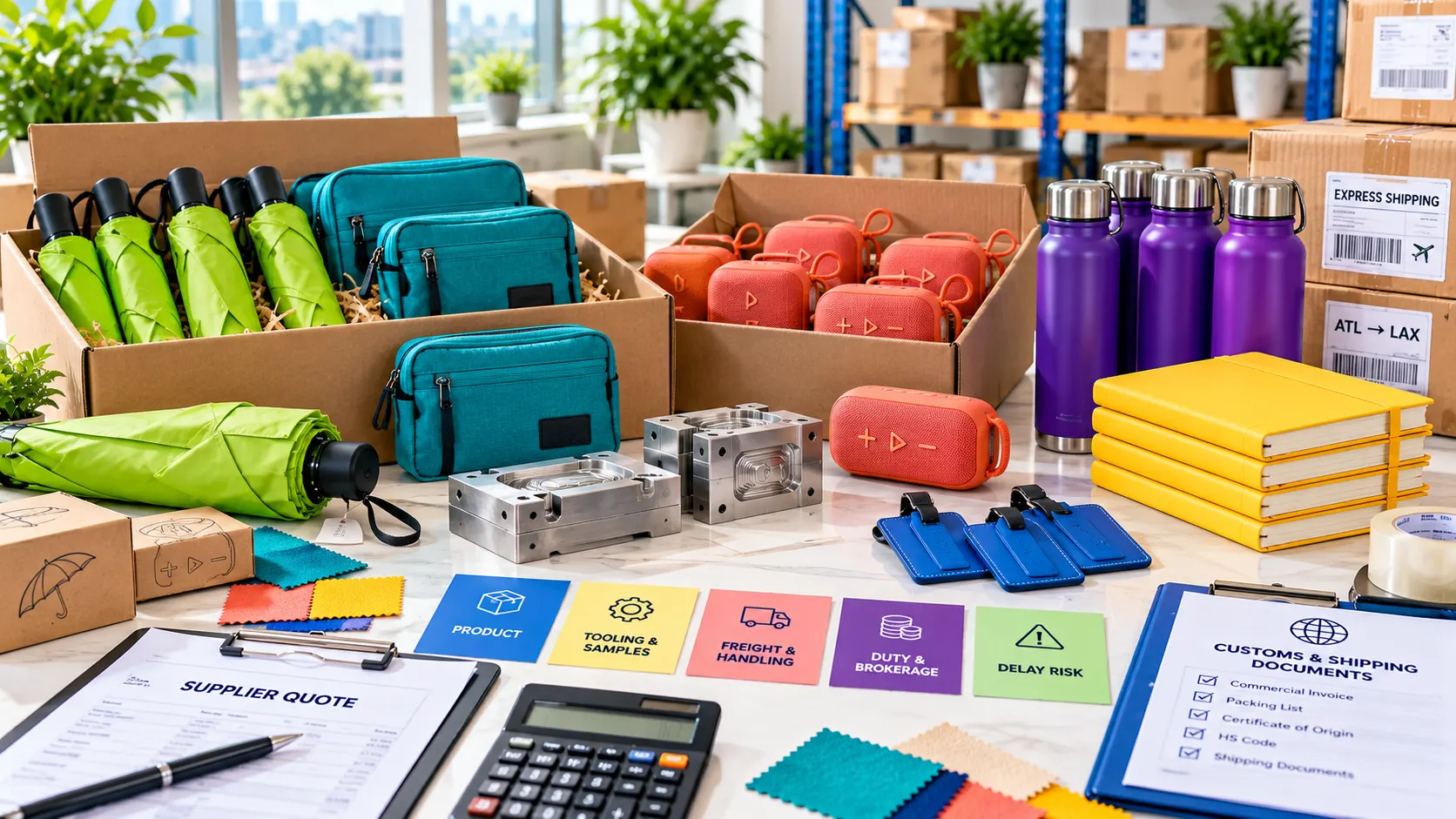
Total delivered cost is everything you pay to have usable goods at the right place on the right date. Comparing unit prices alone ignores every row below except the first, and it undervalues nearshoring promotional products. Duty and trade rules depend on origin, classification and current agreements and change over time, so this article quotes no current rates; check the primary sources at the end and confirm with your customs broker.
| Cost component | What it includes | How nearshoring can change it | Evidence to request |
| Product price | Unit price at the agreed specification and quantity | Often higher per unit | Written quote with validity date and Incoterms® rule |
| Tooling, setup and samples | Moulds, dies, screens, digitising, pre-production samples | May be similar or lower on short runs; transfer cost if moving tooling | Tooling quote and ownership terms |
| Freight and handling | Transport, consolidation, inland delivery | Often lower and more flexible on shorter routes | Dated freight quote for the exact route |
| Duty, taxes and brokerage | Import duty, fees, customs entry | Depends on origin rules and trade agreements; may be lower or unchanged | Broker confirmation and origin evidence |
| Timing and inventory | Earlier ordering, safety stock, storage | Later order date can reduce carrying cost and buffer stock | Latest order date for each option |
| Delay and quality risk | Expedite fees, rework, substitute items | Often a smaller probability and smaller recovery cost | On-time history and an in-line quality plan |
Evidence From the Field: Illustrative Worked Example
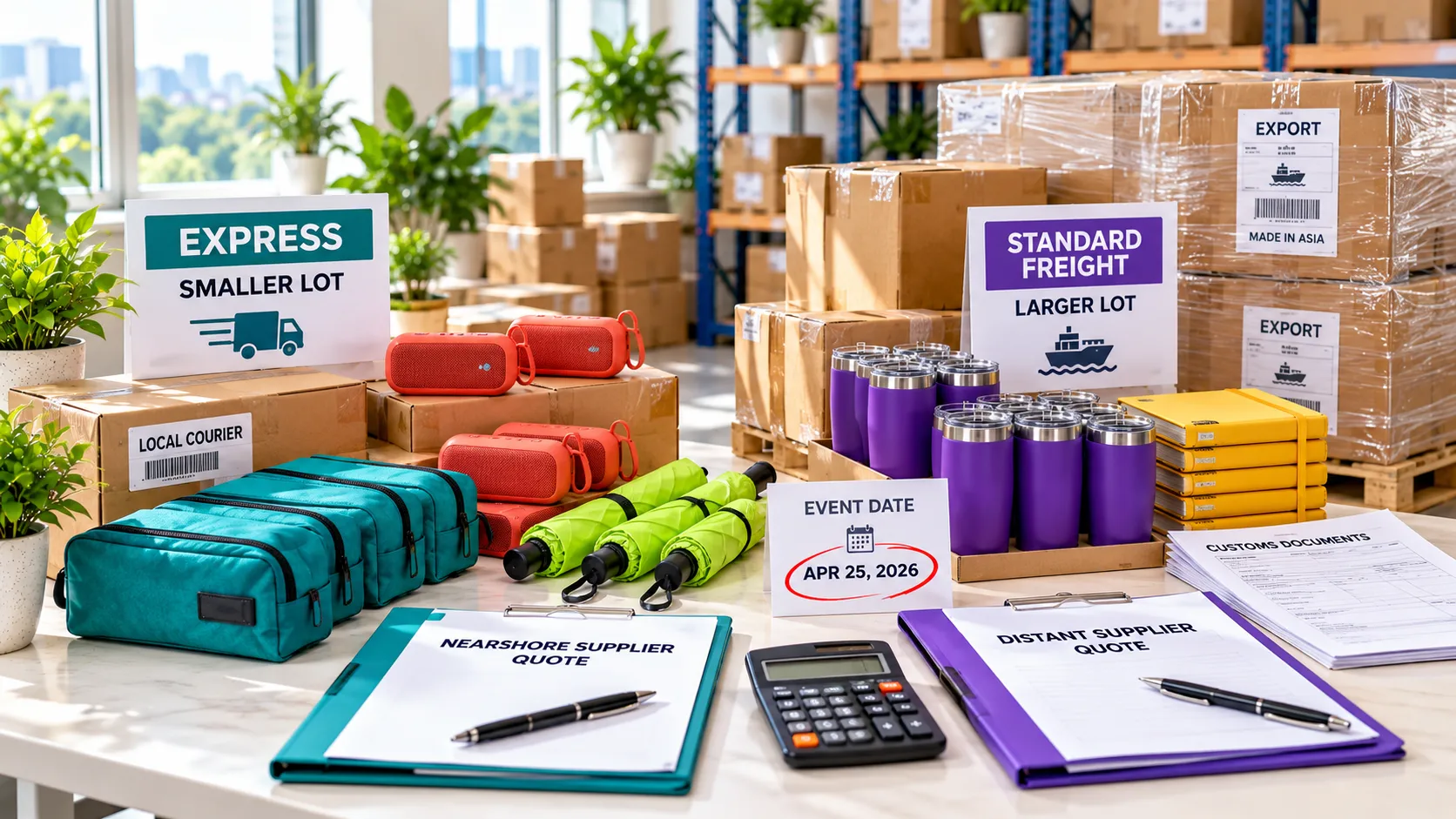
An operations manager at a mid-market software company is ordering 4,000 custom tote bags for a regional launch with a hard date. Procurement collects two comparable quotes: one from a distant supplier and one from a nearshore supplier, both for the same specification. The assumptions below are dated October 27, 2026.
- Market and scope: delivery to a US warehouse; general promotional merchandise; same artwork, materials and decoration on both quotes.
- Risk inputs: a 15% chance of a delay for the distant option and a 5% chance for the nearshore option, each costing $4,500 to recover (air freight and handling). These are the manager’s own estimates, not industry statistics.
| Line item | Distant sourcing | Nearshore |
| Unit price (4,000 units) | $2.10 → $8,400 | $2.65 → $10,600 |
| Tooling, setup and samples | $600 | $600 |
| Freight and handling | $900 | $600 |
| Duty and brokerage (illustrative) | $1,000 | $250 |
| Subtotal before risk | $10,900 | $12,050 |
| Delay risk allowance (probability × $4,500) | 15% → $675 | 5% → $225 |
| Total delivered cost | $11,575 | $12,275 |
| Delivered cost per unit | $2.89 | $3.07 |
The nearshore unit price is about 26% higher, but the delivered cost is $700 higher, roughly 6%, or about $0.18 per unit. Whether that premium for nearshoring promotional products is worth paying depends on what a missed date would cost. The break-even cost is the pre-risk premium divided by the drop in delay probability: ($12,050 − $10,900) ÷ (15% − 5%) = $11,500.
| Cost of a missed date | Distant total | Nearshore total | Difference (nearshore minus distant) |
| $4,500 (air-freight recovery only) | $11,575 | $12,275 | +$700 — distant sourcing is cheaper |
| $11,500 (break-even) | $12,625 | $12,625 | $0 — equal on cost |
| $20,000 (missed launch and replacement run) | $13,900 | $13,050 | −$850 — nearshore is cheaper |
Read the result as a threshold, not a verdict. If a missed date would cost this launch only the air-freight recovery, the distant supplier is the cheaper choice on these assumptions, and nearshoring promotional products is not justified on cost. If a missed date would cost more than about $11,500, nearshoring promotional products wins on expected cost, before counting the benefit of a later design freeze.
Buyer Framework: Six Steps to Decide on Nearshoring Promotional Products
The steps below turn the comparison into a repeatable process. The decision owner is typically the operations manager. Procurement collects the quotes, a quality or compliance reviewer checks documents and category rules, and the campaign or event owner confirms how critical the date is and approves any change in scope.
- Classify the date. Mark each item as hard date, soft window or evergreen, and record the buffer you can afford.
- Screen the item. Use Table 2 to decide whether nearshoring promotional products is realistic for this item, and what tooling you would need to move.
- Request comparable quotes. Ask for the same specification, quantity, Incoterms® rule and validity date from at least one nearshore and one distant supplier.
- Build the cost stack. Fill in Table 3 for each option, using written quotes and your own delay probability and recovery cost.
- Run the break-even. Compare the cost of a missed date with the break-even figure, and note the later design-freeze benefit separately.
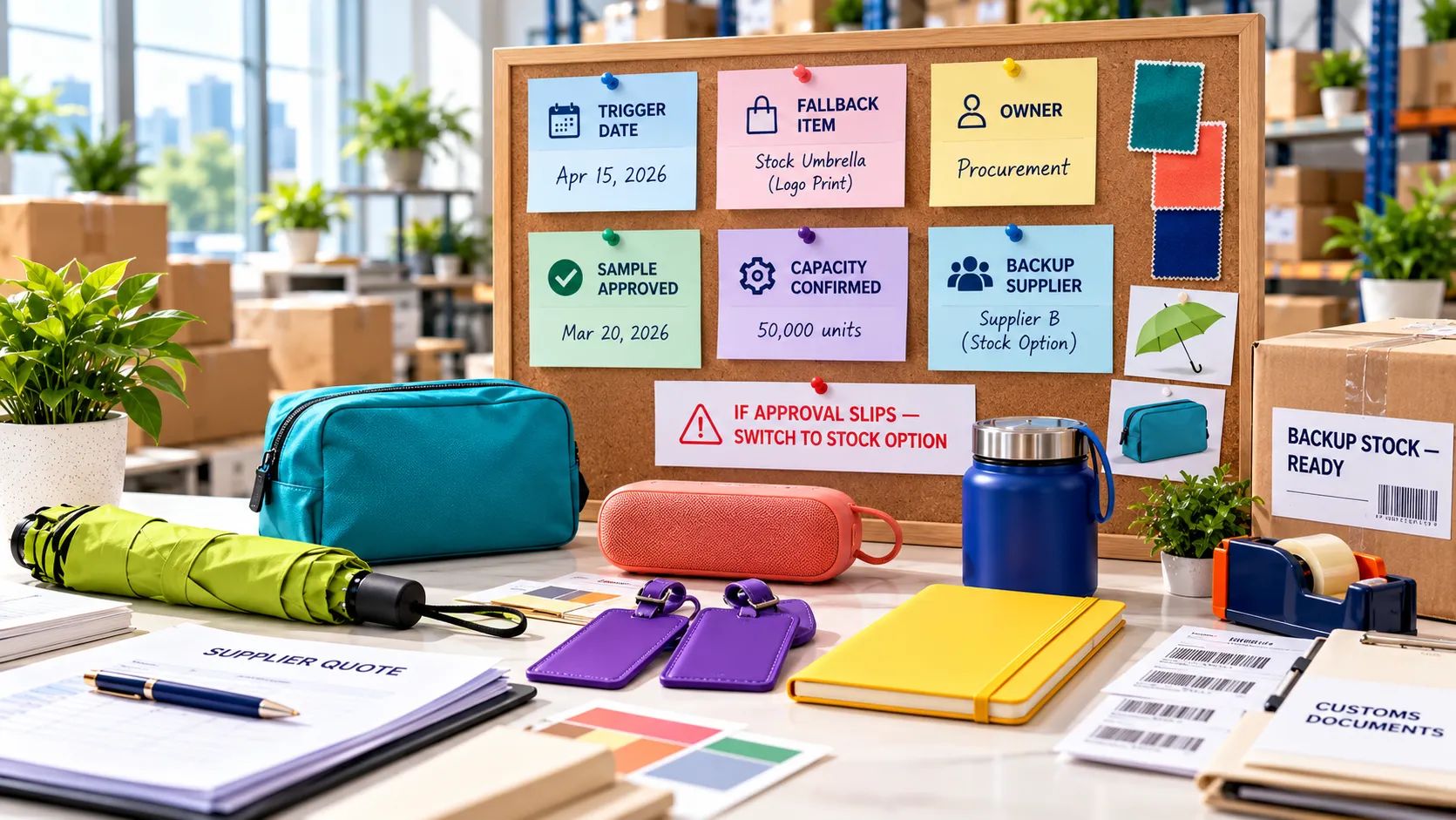
- Prove it and plan the fallback. Approve a sample, set a trigger date for a fallback, and log the assumptions so the decision can be reviewed after delivery.
Sourcing Risk and Delivery Contingency: When Nearshoring Promotional Products Fits the Order
Faster sourcing is only one lever. Good delivery contingency planning pairs the option you choose with a trigger date and a fallback, so a slipping order is handled before the buffer is gone. The table matches common order situations to a leaning and a contingency.
| Order situation | Leaning | Why | Contingency to set |
| Hard-date launch with a custom item | Nearshore, or split with the first lot nearshore | Shorter recovery path and later design freeze | Trigger date at the buffer limit; local-stock substitute pre-approved |
| Recurring evergreen item, stable specification, high volume | Distant sourcing | Unit-price gap dominates when dates are soft | Safety stock and a qualified second source |
| New design likely to need revisions | Nearshore | More sample rounds fit inside the schedule | Cap the number of revision rounds and set approval deadlines |
| Short-notice top-up of an existing order | Nearshore or local stock | Distant lead times may not fit | Confirm matching colours and materials before ordering |
| Campaign across US and UK markets | Split by region | Shorter routes to each market and separate documents | Per-market documents and delivery owners |
Buyer Checklist: Information to Collect Before Nearshoring Promotional Products
Collect the items below first, before nearshoring promotional products is approved, and keep them with the decision record. Decisions made on incomplete quotes tend to be reversed after the order is placed.
| Information | Why it matters | Source |
| Written quotes with validity dates and Incoterms® rule | Makes the options comparable on a delivered basis | Supplier and forwarder |
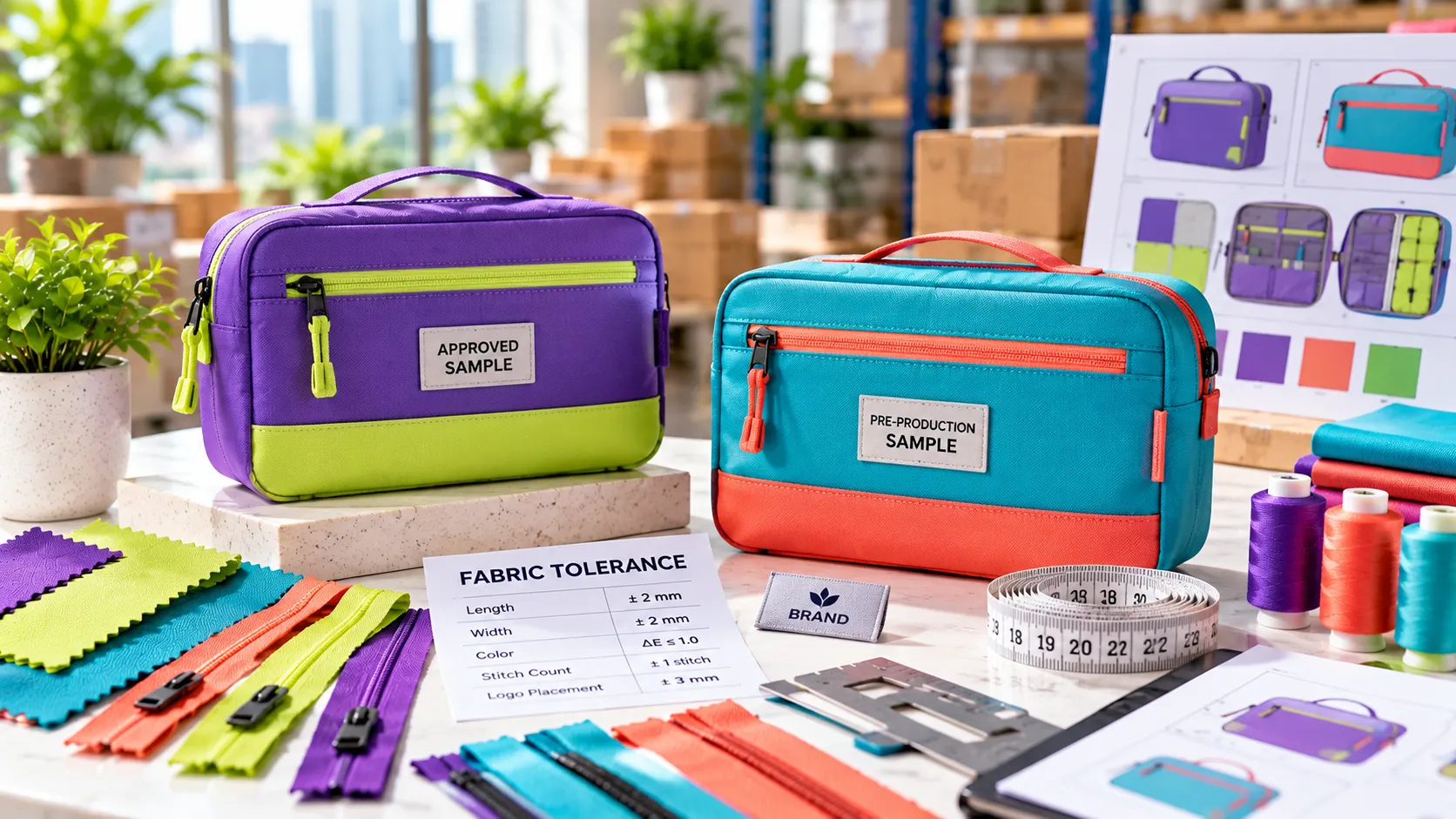
| Sample lead time and number of revision rounds | Sets the real schedule for the first approved item | Supplier |
| Tooling ownership, location and transfer cost | Shows whether a switch is practical | Supplier and current agreement |
| MOQ per variant, colour and decoration | Reveals true minimum spend | Supplier |
| Origin evidence, test reports and category certificates | Supports customs entries and compliance review | Supplier and compliance reviewer |
| On-time history on comparable orders | Replaces assumptions with evidence | Supplier references and your own records |
| Cost of a missed date | Drives the break-even test | Campaign or event owner |
Risks and Limitations of This Approach
- The probabilities, costs and the worked example are illustrative. Your own quotes and risk estimates will move the break-even point, sometimes a lot.
- Nearshoring can shorten the final production and transit stages while upstream materials, such as fabric or components, still arrive from distant sources. Ask where the inputs come from before counting on shorter lead times.
- Duty treatment depends on origin rules, classification and current trade agreements, which change. Confirm eligibility with a customs broker; do not assume a nearshore origin automatically lowers duty.
- Assortment and capacity may be narrower, and large or complex runs may exceed a nearby supplier’s capacity, so confirm written capacity for your quantity and date.
- A smaller nearby supplier base can still create concentration risk. A single nearshore source needs a fallback just as a single distant source does.
- This guide is scoped to general promotional merchandise for US and UK markets. Children’s products, food-contact items and electronics need category-specific review.
Frequently Asked Questions
Is nearshoring promotional products only useful for rush orders?
No. Rush orders show the benefit most clearly, but planned campaigns also gain from a later design freeze, lower buffer stock and shorter revision loops. Evergreen items with stable specifications often still suit distant sourcing.
What order size makes nearshoring promotional products worth the higher unit price?
There is no universal threshold. Smaller and more customised runs tend to favour nearshore suppliers because setup and minimums weigh more, while large stable runs favour the lowest unit price. Run the break-even test on your own quotes instead of relying on a rule of thumb.
Can I split nearshoring promotional products with a distant supplier on one order?
Yes, and it is a common way to protect a hard date: the first lot comes from the nearshore supplier and the balance follows from the distant one. Confirm that colours, materials and decoration match, and expect separate documents and shipments for each lot.
Can nearshoring promotional products reuse tooling I already have overseas?
It depends on who owns the tooling and whether it can be moved or recreated at acceptable cost. Ask for a transfer quote and approve a first-article sample before you commit the full quantity.
How do I estimate the cost of a missed date when nearshoring promotional products?
Ask the event or campaign owner what recovery would cost: air freight, a local-stock substitute, lost placement or a re-run. Record the number with its assumptions in your risk log; our supply chain risk register guide shows one way to score and track it.
Request a Scoped Quote
If you are weighing nearshoring promotional products for an upcoming campaign, share your event date, quantity, item specification and current supplier. Our team can help you request written capacity, tooling and lead-time options from suppliers in our network, so the decision rests on dated quotes and not assumptions.
Prefer a lighter first step? Send us the quotes you already hold and your event date for a document review before you decide.
Sources and Further Guidance
ISO — ISO 31000:2018 Risk management — Guidelines
US Consumer Product Safety Commission — Children’s Product Certificate
UK Government — Placing Manufactured Products on the Market in Great Britain
International Chamber of Commerce — Incoterms® Rules
Author & Reviewer
Written by Claire Morgan, Senior Content Writer, with professional experience managing supply chain risk for branded merchandise programs.
Freshness & Update Log
- Published: October 26, 2026
- Last Reviewed: October 26, 2026
- Next scheduled review: within 6 months, or sooner if cited standards or compliance guidance changes materially.
Related Resources
- /promotional-products-budget-allocation/ — how to decide which portfolio tier a price-break decision should apply to.
- /questions-to-ask-a-promotional-product-supplier/ — 18 evidence-based questions to ask once quotes are in hand.
- /promotional-product-supplier-audit-checklist/ — the 25-point checklist for auditing a supplier before you award the order.
- /promotional-merchandise-vendor-consolidation/ — how vendor consolidation interacts with ongoing performance scoring.