
A promotional product business continuity plan is a short, pre-approved playbook that names a backup for each part of a gift program that can fail: the product, the decoration method, the factory, the shipping route and the packaging. To build one, rank the program by event-date criticality, find the single points of failure, qualify one alternate per layer before you need it, and set dated trigger points with a named decision owner.
High-stakes programs such as executive gifting, product launches, conference kits and client anniversaries share one trait: the delivery date cannot move even when the supply chain does. One late component or one rejected carton can turn calm turnaround planning into an emergency, and an emergency is the most expensive moment to qualify a new supplier. The sections below show how to measure sourcing risk before it becomes a delay, how to prepare a delivery contingency for each stage, and how to document decisions so your team, your factory partners and your marketing sponsor act on the same promotional product business continuity plan. You will find six tables, a worked calculation, a buyer checklist and an FAQ you can adapt to your own programs.
Scope, Market and Assumptions Behind This Promotional Product Business Continuity Plan
This promotional product business continuity plan guide is written for operations managers who own delivery of a corporate gift program and share decisions with marketing, procurement and finance. It does not cover regulated product categories, such as items that need market-specific safety testing or food-contact approval, because those need a separate compliance review. It also avoids universal prices and lead times, which vary by product, factory and season. Every figure below is either a planning convention you should calibrate or a hypothetical value used to show the method.
| Assumption | Value used in this guide | Date set | Review trigger |
| Program size | 300 to 5,000 units per item (planning band, not a benchmark) | 13 Nov 2026 | Program outside this band or with many items |
| Origin and destination | Asian factories; corporate recipients in one or more countries | 13 Nov 2026 | Change of origin or destination market |
| Event date | Fixed; budget can flex inside an agreed band | 13 Nov 2026 | Sponsor allows the date to slip |
| Lead times and prices | Taken from your own current quote, never from this guide | 13 Nov 2026 | Every new or revalidated quote |
| Tariffs, freight rates, carrier schedules | Not quoted here; confirm with primary sources on the decision day | 13 Nov 2026 | Any change of route, carrier or trade rule |
What a Promotional Product Business Continuity Plan Covers
Formal business continuity management, as set out in ISO 22301:2019, rests on a simple idea: identify what must keep working, agree how much disruption is tolerable, and plan the response before a disruption happens. A promotional product business continuity plan applies that idea at program level, which is where operations managers actually feel the pain. Instead of a company-wide document, you get a short plan attached to one gift program that answers a single question: if any one layer fails, what do we switch to, who decides, and by when?
Five layers carry most of the sourcing risk in a corporate gift program. Each needs one tested alternate rather than a long list of options. Table 2 compares the layers using criteria you can verify with your supplier before you commit.
| Layer | Pre-approve in advance | Evidence you can verify | MOQ / lead-time field to request | Residual risk |
| Product | A second item or colorway at similar function and value | Approved sample photo, specification sheet | Alternate item MOQ and production time, quoted as separate lines | Recipient perception if quality or feel differs |
| Decoration | A second method or second decoration site | Test sample on the actual material; signed artwork proof | Setup time and any per-unit change | Logo looks different by method; brand owner must approve |
| Factory | A second qualified factory or production line | Factory profile, sample from that site, written capacity statement | Capacity commitment, sample time, MOQ per site | Color or quality drift between sites |
| Route | A second shipping mode or gateway | Quoted alternate route with Incoterms rule stated | Booking cut-offs and lead time per route | Cost jump; carrier space is not guaranteed |
| Packaging | An alternate carton, mailer or insert | Dimensioned drawing and fit check | Packaging MOQ and sourcing time | Fit errors; weight or volume change affects freight |
Every row has an evidence column for a reason: an alternate you cannot verify is a hope, not a plan, and a promotional product business continuity plan made of hopes fails under pressure. Ask your supplier to list each alternate’s MOQ and lead time as separate lines in the same quote, so that you compare a firm figure with a firm figure instead of a firm figure with a guess.
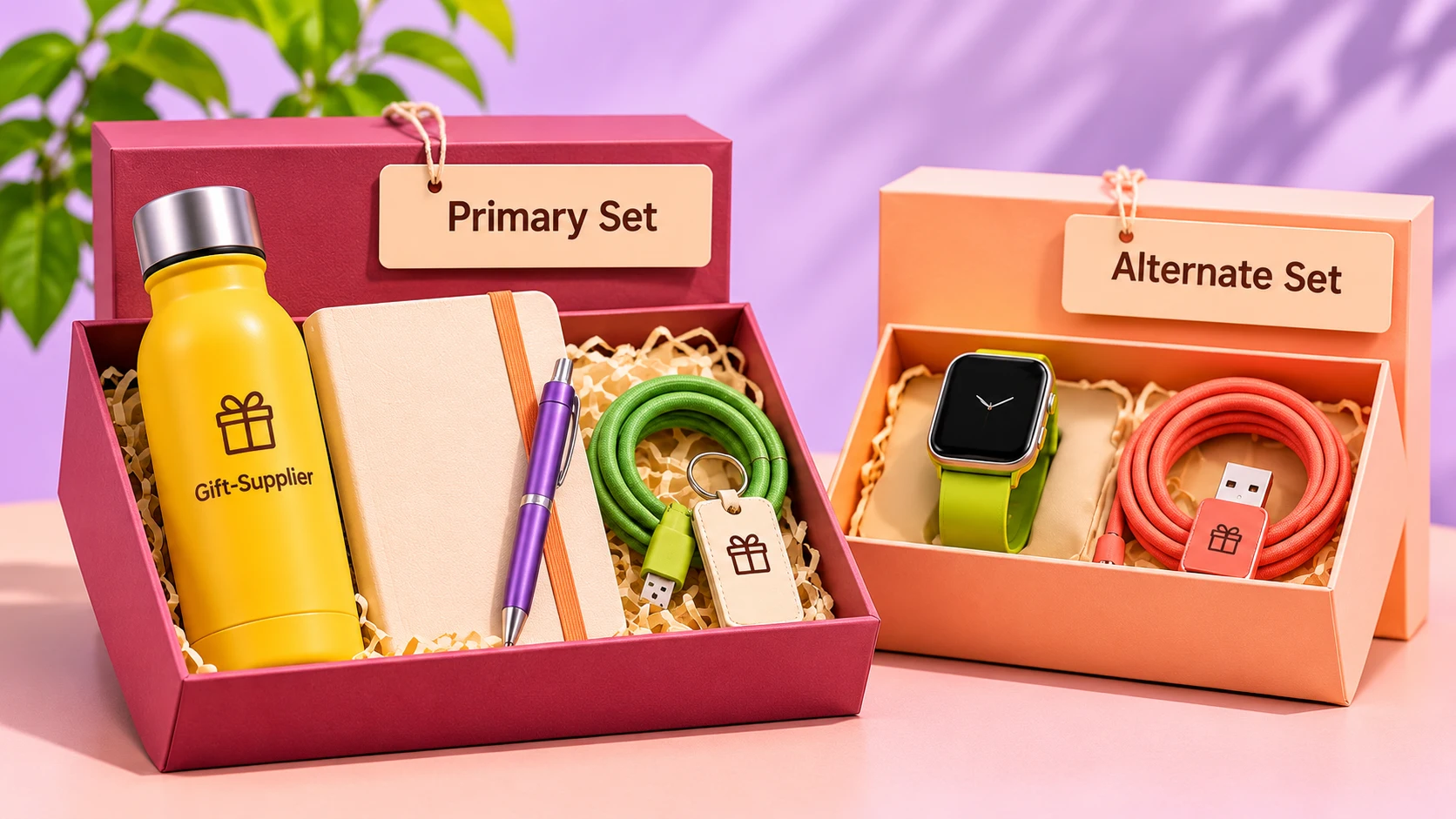
A Six-Step Framework for Your Promotional Product Business Continuity Plan
The six steps below turn the promotional product business continuity plan into a workflow you can run in one planning meeting for each high-priority program. Each step names a decision owner, because a plan without an owner usually fails at the exact moment it is needed. For context on how factory partners and sourcing routes are organized, see the factory and supply network page.
Rank the Program by Criticality
Decision owner: Operations Manager, with written agreement from the marketing sponsor.
Not every gift program deserves a full promotional product business continuity plan. Sort programs into three tiers before you spend time or money on alternates.
- Tier A (date-locked): executive gifts, launch kits and client events where a missed date cannot be recovered. Prepare alternates for all five layers.
- Tier B (flexible by days): seasonal or onboarding programs. Prepare product and route alternates only.
- Tier C (internal giveaways): no formal plan; accept the delay if it happens.
Record the tier in the program brief. This is the first piece of turnaround planning, because the tier defines how much schedule slack and budget flexibility you may use later.
Map Sourcing Risk and Single Points of Failure
Decision owner: Operations Manager, with procurement.
List every component, process and handover in the quote, then ask of each one: if this were unavailable for two weeks, what would happen? Single-source custom parts, one-site factories and one-route shipments usually surface first as your biggest sourcing risk. Score each item with this formula, using whole numbers:
| Priority score = Likelihood (1 to 5) × Impact (1 to 5) × Detectability (1 to 3, where 3 means hard to spot early) |
As a planning convention, prepare an alternate for any item scoring 30 or more and review items from 15 to 29. Calibrate those thresholds against your own program history.
| Failure point | Likelihood | Impact | Detectability | Score | Action |
| Single-site factory for a custom item | 3 | 5 | 2 | 30 | Qualify a second site |
| Custom component with one supplier | 3 | 5 | 2 | 30 | Approve an alternate product |
| Custom-size carton | 2 | 3 | 3 | 18 | Pre-approve alternate packaging |
| Single decoration vendor | 2 | 4 | 2 | 16 | Review; test a second method |
| Single ocean route, no booking buffer | 3 | 4 | 1 | 12 | Monitor; request alternate quote |
This scorecard turns vague worry about sourcing risk into a ranked list your sponsor can read in a minute. Share it with your supplier, because factory teams often know about material or capacity constraints that never appear on a quotation, and shared data makes turnaround planning more realistic.

Qualify Product, Decoration and Factory Alternates
Decision owner: Operations Manager; the brand owner approves appearance.
With the ranked list in hand, add it to your turnaround planning by qualifying alternates for the first three layers, which carry most sourcing risk, using these rules:
- Product: the alternate must match function, decoration area and a pre-agreed value band, and the brand owner must approve it in writing before the plan is final.
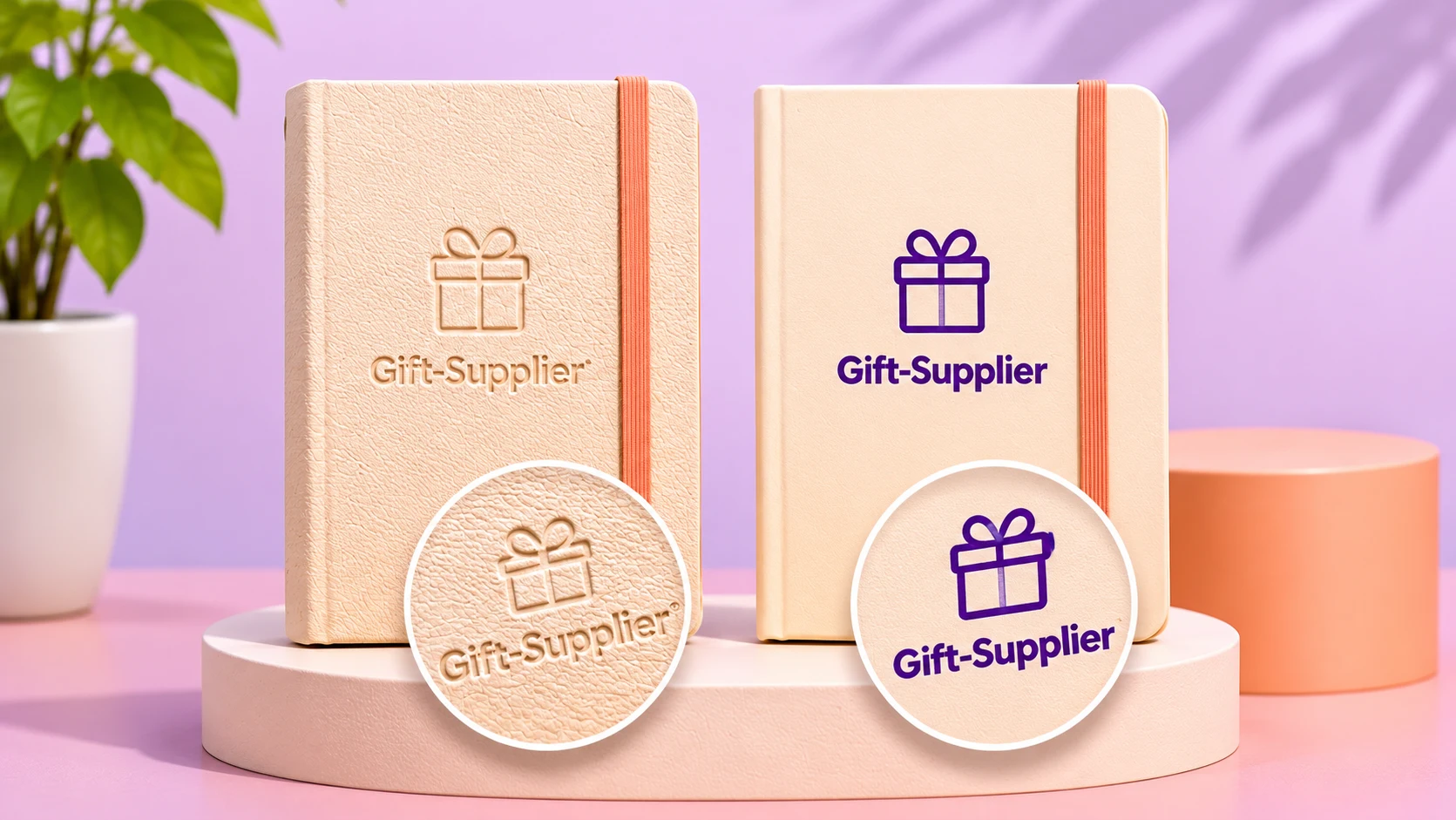
- Decoration: test the alternate method on the actual item, because a logo can look different when screen printing is replaced by laser engraving or embroidery. Approve the tested sample, not the artwork file alone.
- Factory: ask for a sample from the second site and a written capacity statement. Photos and verbal assurances do not protect your date.
Prepare Route and Packaging Alternates for Delivery Contingency
Decision owner: Logistics lead, with your freight forwarder.
The last two layers decide whether finished goods reach people intact and on time, which makes them the core of any delivery contingency and of realistic turnaround planning.
- Route: ask your forwarder for a second route quote with booking cut-offs, and agree in advance when a partial shipment by a faster mode is justified for priority recipients as part of your delivery contingency.
- Packaging: pre-approve an alternate carton, mailer or insert with dimensioned drawings, and confirm its MOQ and sourcing time.
- Responsibility: confirm which Incoterms rule applies to each shipment leg, because a route change can shift who carries cost and sourcing risk.
- Recipients: keep a prioritized recipient list so that a split shipment reaches the right people first.
Set Trigger Dates and Decision Rights
Decision owner: Operations Manager; escalation to the marketing sponsor and finance approver.
Alternates only help if someone switches to them at the right time. Replace “we’ll see how it goes” with dated checkpoints, observable signals and named owners. This is where turnaround planning becomes operational instead of aspirational. Each checkpoint should also state the delivery contingency it activates.
| Checkpoint | Timing convention | Signal to watch | Pre-agreed action | Decision owner |
| Sample approval | First quarter of the window | Pre-production sample not signed off by the brand owner | Review the product or decoration alternate | Operations Manager |
| Mid-production | About halfway | Output behind the agreed plan, or an inspection fails | Split the run to the second site or approve the alternate item | Operations Manager and marketing sponsor |
| Pre-shipment | Before the booking cut-off | Goods not released, or cut-off at risk | Move priority recipients to the alternate route | Operations Manager and finance approver |
| In transit | Departure to delivery | Carrier delay notice or customs hold | Start recipient communication and a local re-delivery plan | Logistics lead |
The timing column is a planning convention, not a measured benchmark. Calibrate your turnaround planning against your own timeline; our related guide on building a promotional product timeline backward from the event date explains how.

Test the Promotional Product Business Continuity Plan and Put It on One Page
Decision owner: Operations Manager; procurement reviews.
Run a 30-minute tabletop drill on a high-priority program. Simulate a sourcing risk event in one layer, then check who decides, how quickly, and what information is missing. Store the final plan on one page with the alternates, approvals, contacts, cost authority and the delivery contingency for each layer. Review it after each Tier A program and whenever an assumption in Table 1 changes, and refresh your turnaround planning at the same time. A promotional product business continuity plan that nobody has rehearsed tends to fail on the first call.
Evidence Block: Worked Calculation and Quote Structure
Method demonstration, not a customer case. The figures below are hypothetical and use generic currency units (CU). Before publishing, replace them with anonymized data from a completed project and add the real sample photos referenced in the visual recommendations.
Is a Promotional Product Business Continuity Plan Worth Its Cost?
Compare the cost of your promotional product business continuity plan with the expected loss it removes. The formula is: expected loss = probability of disruption × cost of failure. The example assumes a 1,000-unit executive welcome kit with a fixed launch date.
| Item | Hypothetical value | How it is derived |
| Primary program budget | 20,000 CU | Total of the current quote |
| Cost to qualify alternates | 1,000 CU (5% of budget) | Test samples, artwork proofs, alternate carton, delivery contingency route quote fee |
| Probability of disruption in at least one layer | 20% | Team estimate from the Table 3 sourcing risk scorecard |
| Cost of failure without a plan | 12,000 CU | Expedited freight, rework and an allowance for missed-date impact |
| Expected loss without a plan | 2,400 CU | 20% × 12,000 CU |
| Cost of failure with a plan | 3,000 CU | Switch to a pre-approved alternate; most rework avoided |
| Expected loss with a plan | 600 CU | 20% × 3,000 CU |
| Net benefit of the plan | 800 CU | (2,400 − 600) − 1,000 CU |
Even in this simple case the benefit is modest in money terms, which is why Tier B programs often skip a full promotional product business continuity plan. For a Tier A program the real value is protecting a date that cannot be bought back, and the calculation understates that.

What a Quote Looks Like When Alternates Are Priced In
Ask your supplier to show the primary option and its alternate on adjacent lines, with the approval status and the evidence for each. Table 6 shows an anonymized structure of fields to request for a promotional product business continuity plan. Use it as a template for your own quote review.
| Layer | Primary option | Alternate option | Approval status | Evidence on file |
| Product | Item A, color 1 | Item A, color 2 | Brand owner approved in writing | Sample photo, specification |
| Decoration | One-color screen print | Laser engraving | Test sample approved | Photo of test on actual item |
| Factory | Factory 1 | Factory 2 | Sample received; capacity confirmed in writing | Sample, capacity email |
| Route | Sea freight | Air freight for priority recipients | Quote valid until a stated date | Forwarder quote with cut-offs |
| Packaging | Printed mailer | Plain mailer with sleeve | Fit check passed | Dimensioned drawing |

Buyer Checklist: Is Your Promotional Product Business Continuity Plan Ready?
Tick every item before you sign off a promotional product business continuity plan for a Tier A program.
☐ The program has a tier, and the marketing sponsor has agreed to it in writing.
☐ A sourcing risk scorecard exists, and every item scoring 30 or more has an alternate.
☐ The alternate product is approved in writing by the brand owner.
☐ The alternate decoration has been tested on the actual item, and the sample is approved.
☐ A second factory site has supplied a sample and a written capacity statement.
☐ A delivery contingency route is quoted with booking cut-offs, and the Incoterms rule is stated.
☐ An alternate packaging option is pre-approved with a dimensioned drawing.
☐ Turnaround planning is documented as four trigger checkpoints with dates, signals, actions and named decision owners.
☐ Cost authority for the delivery contingency is agreed with finance before it is needed.
☐ The one-page plan has been rehearsed in a tabletop drill and stored where the whole team can find it.
Risks and Limits of a Promotional Product Business Continuity Plan
- Alternates cost money and can reduce consistency. A second factory or decoration method can change color, finish or feel, so the brand owner must approve the alternate before you rely on it.
- A pre-approved alternate does not remove sourcing risk or guarantee capacity. Factory and carrier capacity can change by season, so get capacity statements and route quotes in writing and ask when they expire.
- Route and trade conditions are volatile. This guide does not quote tariffs, freight rates or carrier schedules. Check primary sources on the day you decide, and price your delivery contingency with current figures.
- Regulated categories need separate review. Products that require market-specific safety, labeling or origin evidence are outside this guide.
- Hypothetical figures are not benchmarks. The scores, thresholds, timing conventions and the calculation are there to show a method for turnaround planning. Replace them with your own data.
- Over-planning wastes effort. Applying a full promotional product business continuity plan to low-stakes programs adds cost without much benefit, which is why Step 1 tiers the program first.
Scope Your Promotional Product Business Continuity Plan With a Supplier
Request a scoped quote. Send your item list, quantities, destinations and event date, and ask for your promotional product business continuity plan, meaning the primary plan and its alternates, to be priced side by side.
Not ready for a quote? Share your current quote or specification for a document review against the checklist above and your turnaround planning.
Frequently Asked Questions
How many alternates does a promotional product business continuity plan need?
Prepare alternates only for the layers whose sourcing risk score is above your threshold. A Tier A program often needs all five layers, a Tier B program usually needs product and route alternates, and a Tier C program needs none, which keeps turnaround planning proportionate.
Does an alternate factory mean paying two factories?
Not necessarily. Qualifying a second site usually costs sample fees and some coordination time. Reserving capacity is a separate commercial agreement, so ask for it as a separate line in the quote. A promotional product business continuity plan normally pays for qualification, not for duplicate production. You can read how sourcing partners are organized on our factory and supply network page.
When should I trigger the delivery contingency instead of waiting?
Trigger it when a pre-agreed signal appears at a checkpoint, not when the delay is already visible to recipients. Table 4 lists example signals. Waiting usually narrows your options and raises the sourcing risk of last-minute changes.
Is air freight a sufficient delivery contingency on its own?
No. Air freight addresses only the route layer. It does not fix a rejected sample, a decoration problem or a production shortfall, and space can tighten near peak periods. Pair it with product, decoration and factory alternates inside the same promotional product business continuity plan for date-locked programs.
What should I ask a supplier to include in a quote to support continuity?
Ask for alternates as separate line items with their own MOQ and lead time, a validity window for each price, a sample plan, a written capacity statement and booking cut-off dates. This makes turnaround planning verifiable before you approve production.
Sources and Further Guidance
ISO — ISO 31000:2018 Risk management — Guidelines
US Consumer Product Safety Commission — Children’s Product Certificate
UK Government — Placing Manufactured Products on the Market in Great Britain
International Chamber of Commerce — Incoterms® Rules
Author & Reviewer
Written by Claire Morgan, Senior Content Writer, with professional experience managing supply chain risk for branded merchandise programs.
Freshness & Update Log
- Published: November 13, 2026
- Last Reviewed: November 13, 2026
- Next scheduled review: within 6 months, or sooner if cited standards or compliance guidance changes materially.
Related Resources
- /promotional-products-budget-allocation/ — how to decide which portfolio tier a price-break decision should apply to.
- /questions-to-ask-a-promotional-product-supplier/ — 18 evidence-based questions to ask once quotes are in hand.
- /promotional-product-supplier-audit-checklist/ — the 25-point checklist for auditing a supplier before you award the order.
- /promotional-merchandise-vendor-consolidation/ — how vendor consolidation interacts with ongoing performance scoring.