

The hidden costs behind a cheap promotional product quote typically come from three places: a higher defect rate that creates rework or replacement costs, an optimistic lead time that risks delay or rush freight, and weak packaging that leads to transit damage. These cheap promotional products hidden costs can turn a lower unit price into a higher total cost once the downstream expense is counted. This guide is written for marketing procurement leads comparing two or more quotes for the same specification in US and UK markets, where the lowest quoted unit price is not yet the chosen supplier. It assumes you can request a defect rate, a production schedule, and a packaging sample from each supplier before deciding.
Budget scrutiny makes this a current priority: the quote that looks like the obvious budget win on a spreadsheet is exactly the one most likely to have cut something that doesn’t show up until the order is already in production or transit. The sections below provide a decision table for where hidden costs come from, a cost chain showing how one cut cascades into several downstream costs, a formula for pricing them in before you award, and an illustrative worked comparison.
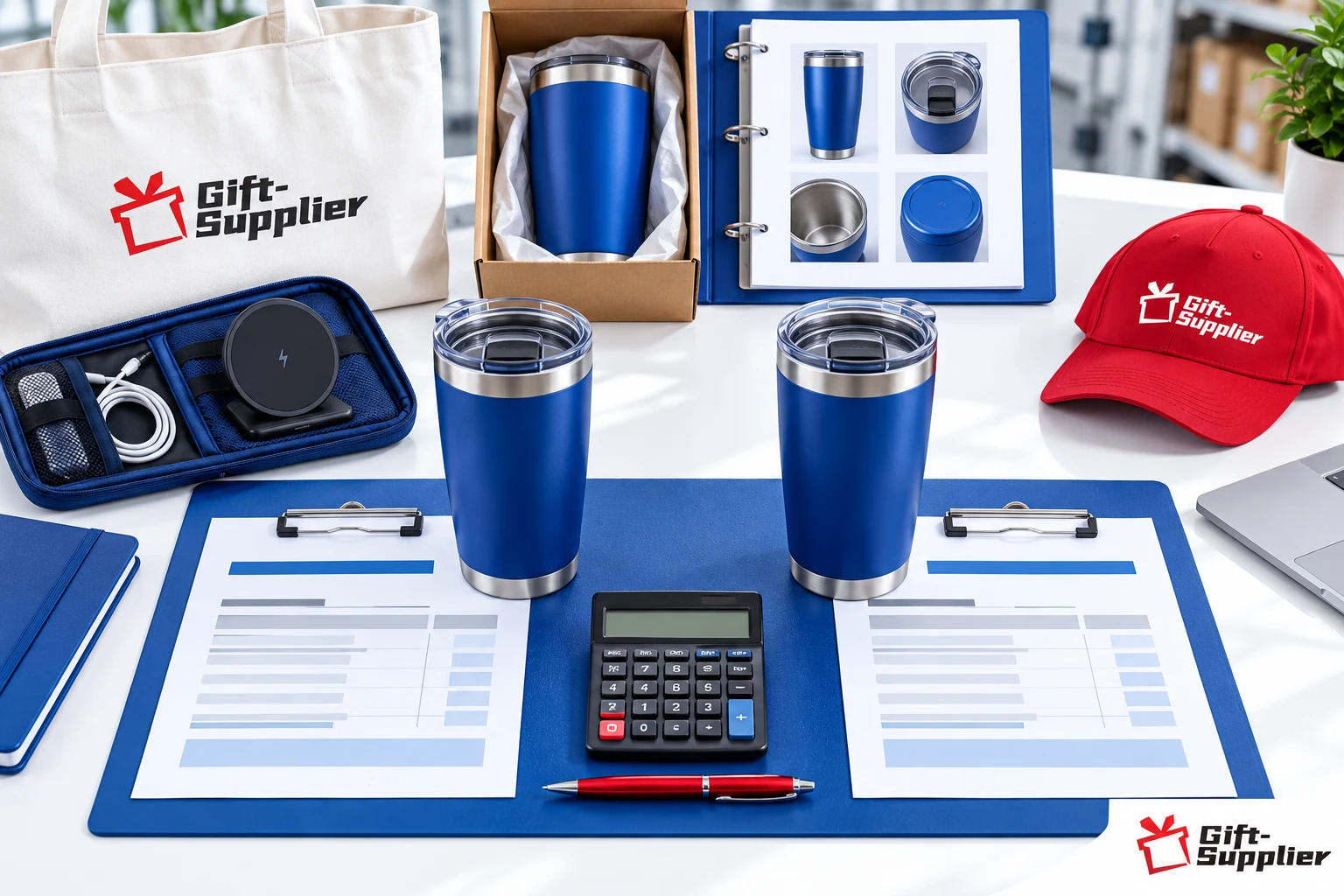
Why the Cheapest Quote Is Rarely the Cheapest Outcome
A unit price is easy to compare and easy to defend in a budget review, which is exactly why it gets treated as the deciding factor more often than it should. What a unit price doesn’t show is what was cut to reach it — fewer inspection steps, a tighter production schedule with no buffer, or packaging sized to the minimum the product can survive in ideal conditions.
Cheap promotional products hidden costs show up later, after the order is already placed: a batch of defective units, a shipment that arrives late, or packaging that fails in transit. By then, the saving on the original quote is usually smaller than the cost of fixing the problem it created.
Decision Table: Where Hidden Costs Come From
Use the table below to check what a notably cheap quote may have cut, and what to request to verify it either way.
| Cut corner | What the cheap quote likely skipped | Downstream cost it creates | Evidence to request |
| Defect rate / QC | Reduced or skipped quality inspection | Rework, reshipment, or replacement cost for failed units, on top of the original unit cost | A stated defect tolerance and inspection process, not just “quality guaranteed” |
| Production lead time buffer | No buffer built into the schedule, or an optimistic timeline | Rush freight, expedited fees, or a missed event date entirely | A production schedule showing proofing time separately from production time |
| Packaging durability | Minimal or undersized packaging to save material cost | Damaged units on arrival, requiring replacement or disappointing the recipient | A packaging sample and a transit damage test or prior claim rate |
| Communication & responsiveness | Fewer staff or slower support to keep overhead low | Procurement time spent chasing status updates and resolving issues | Stated response-time commitments, not just a sales promise |
| Recovery terms | No written remedy for a failure, since it adds no visible cost to the quote | Full cost of a defect or delay falls on the buyer with no recourse | A written reproduction or credit clause in the contract or quote terms |
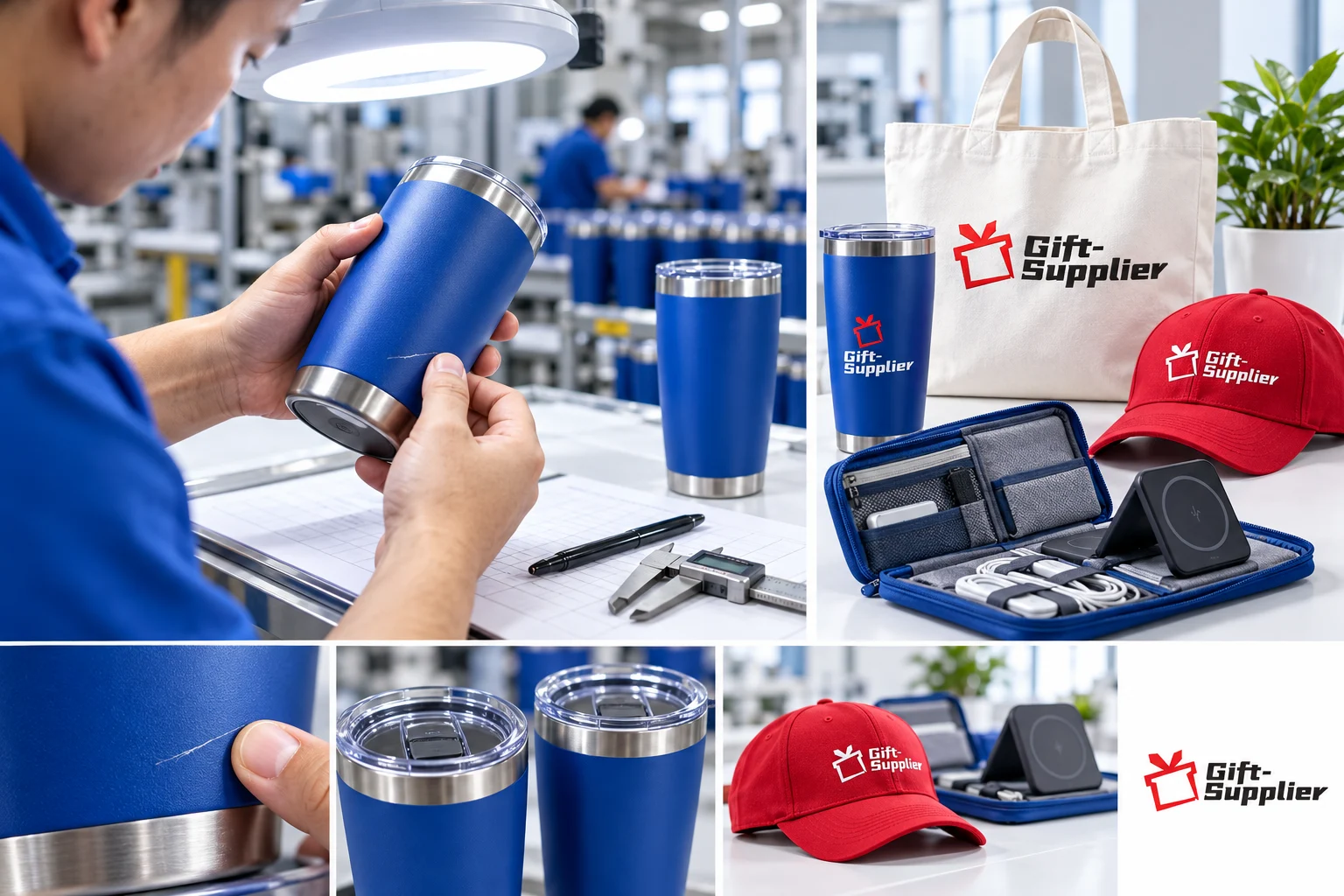
The Hidden Cost Chain: How One Cut Creates Several Downstream Costs
Each of the three failure modes named in this guide’s angle doesn’t create just one cost — it tends to cascade into a short chain of them.
| Failure mode | Immediate symptom | First downstream cost | Second downstream cost |
| Defects | Units fail inspection or arrive damaged | Replacement or rework cost | Internal time spent managing the issue |
| Delays | Production or shipping takes longer than quoted | Rush freight or expedited fees | A missed event date, which can reduce the gift’s value entirely |
| Weak packaging | Packaging fails in transit | Damaged units requiring replacement | A poor unboxing experience that undercuts the gift’s purpose |
Buyer Framework: How to Price In Hidden Costs Before Awarding
The steps below convert these three risk categories into an adjusted, comparable cost. The decision owner is typically the marketing procurement lead, with input from whoever manages receiving or quality on a day-to-day basis.
- Request the supplier’s defect rate or quality tolerance in writing, and estimate replacement cost for that rate at your order volume.
- Request a production schedule showing proofing time separately, and compare the stated lead time against your own history with similar orders.
- Request a packaging sample and ask about the supplier’s transit damage or claim rate, if tracked.
- Estimate internal handling time for a quote that would need more chasing or correction than a more complete one would.
- Add the estimated defect, delay, and packaging costs to the quoted unit price to get an adjusted, comparable cost.
- Compare the adjusted cost across all quotes, not just the quoted unit price.
- Document the adjustment and its assumptions, dated, so it can be revisited at reorder.
| Adjusted unit cost = Quoted unit price + (Defect rate × Replacement cost per unit) + (Delay risk × Expedite cost per unit) + (Packaging failure rate × Replacement cost per unit) + (Internal handling cost ÷ Order quantity) |
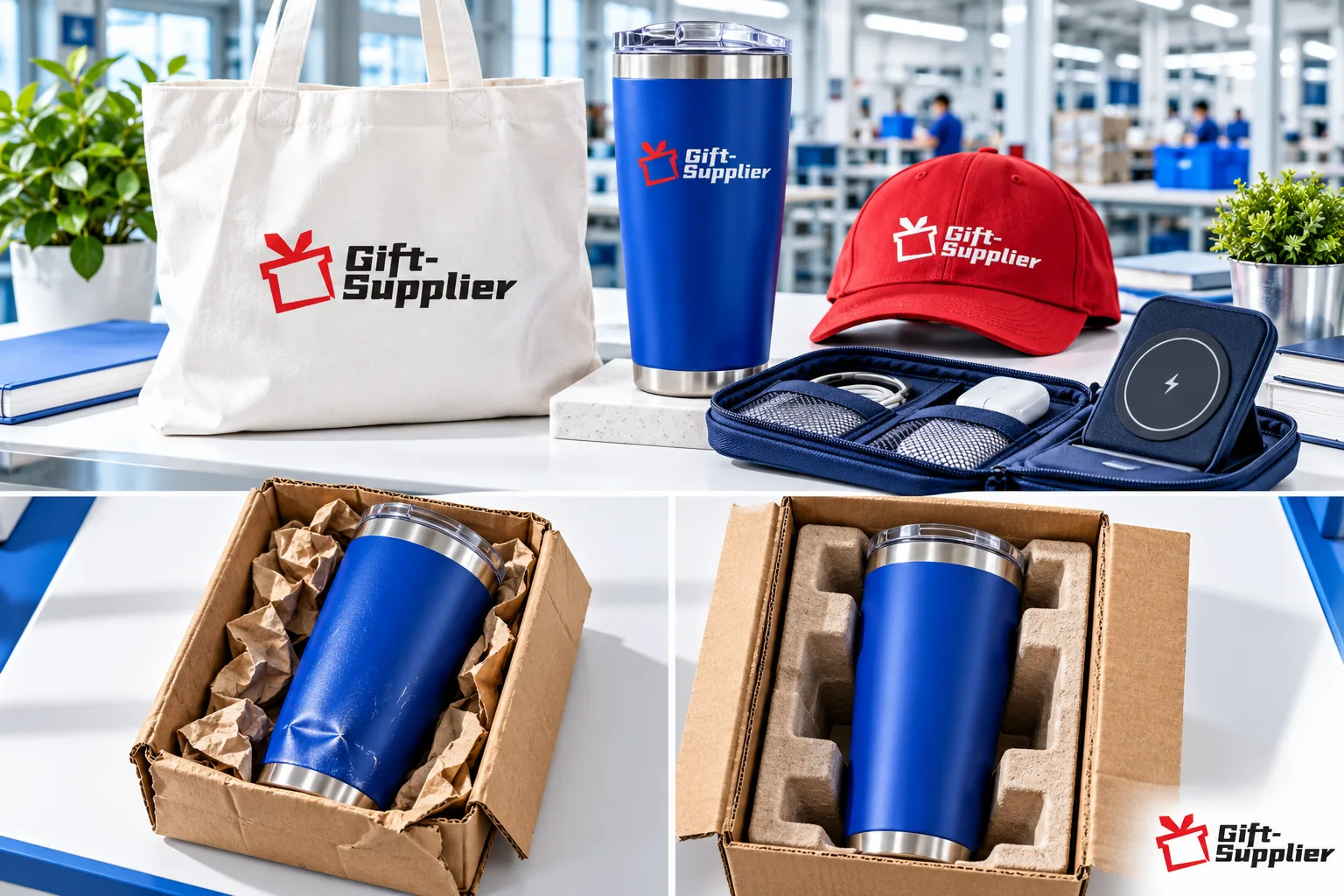
Evidence From the Field: Illustrative Hidden Cost Calculation
A marketing procurement lead compares two quotes for 1,000 units of the same branded item. Quote A is the cheapest on paper; Quote B is priced higher but backed by a documented QC process, schedule, and packaging test.
| Cost element | Quote A ($3.00/unit) | Quote B ($3.60/unit) |
| Defect rate (illustrative) | 8% | 2% |
| Defect cost per unit | $0.24 | $0.07 |
| Delay risk (illustrative) | 20% | 5% |
| Delay cost per unit | $0.10 | $0.03 |
| Packaging failure rate (illustrative) | 5% | 1% |
| Packaging cost per unit | $0.15 | $0.04 |
| Internal handling cost per unit | $0.50 | $0.10 |
| Total hidden cost per unit | $0.99 | $0.24 |
| Adjusted unit cost | $3.99 | $3.84 |
| Total cost at 1,000 units | $3,990 | $3,840 |
On the original quote, Quote A looked 17% cheaper than Quote B. Once defect, delay, packaging, and handling costs are priced in, Quote B becomes the cheaper option by about $150 across the order, despite its higher unit price. The saving on the original quote was smaller than the hidden cost it was likely covering.

Signals a Quote May Be Hiding These Costs
A few patterns in a quote are worth a direct follow-up question before assuming the price is simply a good deal.
| Signal | What it suggests |
| No stated defect rate or QC process | Quality may not be tracked or controlled, raising defect risk |
| Vague or “ASAP” lead time with no schedule | Delay risk is higher than a quote with a documented schedule |
| No packaging sample offered | Packaging durability hasn’t been demonstrated, not just assumed |
| Price significantly below other quotes for the same spec | Often one of the above was cut to hit that price |
| No written remedy for a defect or delay | The cost of a failure falls entirely on the buyer |
Quick Reference: What to Request From Every Supplier
Regardless of how a quote is priced, requesting the same evidence from every supplier is what makes the comparison fair.
| Evidence type | Why it matters |
| Defect rate or QC process | Prices in replacement risk before you commit |
| Production schedule with proofing time shown | Prices in delay risk realistically, not optimistically |
| Packaging sample | Prices in transit damage risk before a shipment arrives |
| Written remedy for a failure | Determines who bears the cost if something goes wrong |
| Itemized quote, not a single bundled price | Makes it possible to see which risk area is actually being cut |
Risks and Limitations of This Framework
- Defect, delay, and packaging failure rates in this guide are illustrative; actual rates depend on the specific supplier, product, and category.
- A lower price doesn’t always mean a hidden cost was cut; some suppliers genuinely operate at lower overhead without sacrificing quality, which is why verification matters more than assumption.
- Internal handling time estimates are rough by nature; tracking your own team’s time on a few real orders helps refine them over time.
- This framework estimates probability-weighted cost, not a guarantee; a specific order can still turn out better or worse than the adjusted estimate.
- Packaging failure rates are rarely tracked formally by suppliers; a transit damage test on a sample is a reasonable substitute when historical data isn’t available.
- Compliance-related defects carry risks beyond cost, including legal and safety exposure, and should be reviewed separately from this cost-focused framework.
Request a Scoped Quote
If you are comparing quotes and want to check what a notably low price might be cutting, share your specifications and the quotes you’ve received. Our team can help you request the defect, schedule, and packaging evidence needed for a fair comparison.
Prefer a lighter first step? Send us your current quotes for a quick hidden-cost review before you award the order.
Frequently Asked Questions
How do we estimate a defect rate before placing an order
Ask the supplier directly for their stated quality tolerance or historical defect rate, and request a pre-production sample to inspect against your specification. Where no history exists, treat the absence of a stated rate as a signal to apply a more conservative estimate when evaluating cheap promotional products hidden costs, not to assume zero defects.
Isn’t a “hidden cost” just a normal part of doing business with any supplier
Some risk is unavoidable with any supplier. The goal here isn’t to eliminate it, but to price it into the comparison explicitly, so a decision based on unit price alone doesn’t accidentally select the option with the most risk attached to the landed cost.
Should we just always pick the more expensive quote
No. A higher price doesn’t automatically mean lower hidden costs — it has to be backed by the same evidence: a stated defect rate, a documented schedule, and a packaging sample. The adjusted-cost comparison, including the relevant price trade-offs, not the sticker price in either direction, is what should decide it.
How much internal handling time is reasonable to estimate
Start with a rough estimate based on how much time your team has spent managing issues on past orders from suppliers with similar quote quality, and refine it as you track real time on a few orders. An imperfect estimate is still more useful than treating this cost as zero when planning your procurement budget.
How does this relate to total cost of ownership
This framework focuses specifically on the risk-based costs behind a notably cheap quote, including cheap promotional products hidden costs. For the fuller calculation — including tooling, testing, freight, and duties — see our promotional product total cost of ownership guide.
Sources and Further Guidance
International Chamber of Commerce — Incoterms® Rules
US International Trade Commission — Harmonized Tariff Schedule (HTS) search
UK Government — Trade Tariff: look up commodity codes, duty and VAT rates
US Consumer Product Safety Commission — Children’s Product Certificate
Author & Reviewer
Written by Claire Morgan, Senior Content Writer, with professional experience comparing supplier quotes and pricing in downstream risk for branded merchandise programs.
Freshness & Update Log
- Published: October 5, 2026
- Last Reviewed: October 5, 2026
- Next scheduled review: within 12 months, or sooner if referenced freight or duty guidance changes materially.
Related Resources
- /promotional-products-budget-allocation/ — how to decide which portfolio tier a price-break decision should apply to.
- /questions-to-ask-a-promotional-product-supplier/ — 18 evidence-based questions to ask once quotes are in hand.
- /promotional-product-supplier-audit-checklist/ — the 25-point checklist for auditing a supplier before you award the order.
- /promotional-merchandise-vendor-consolidation/ — how vendor consolidation interacts with ongoing performance scoring.