
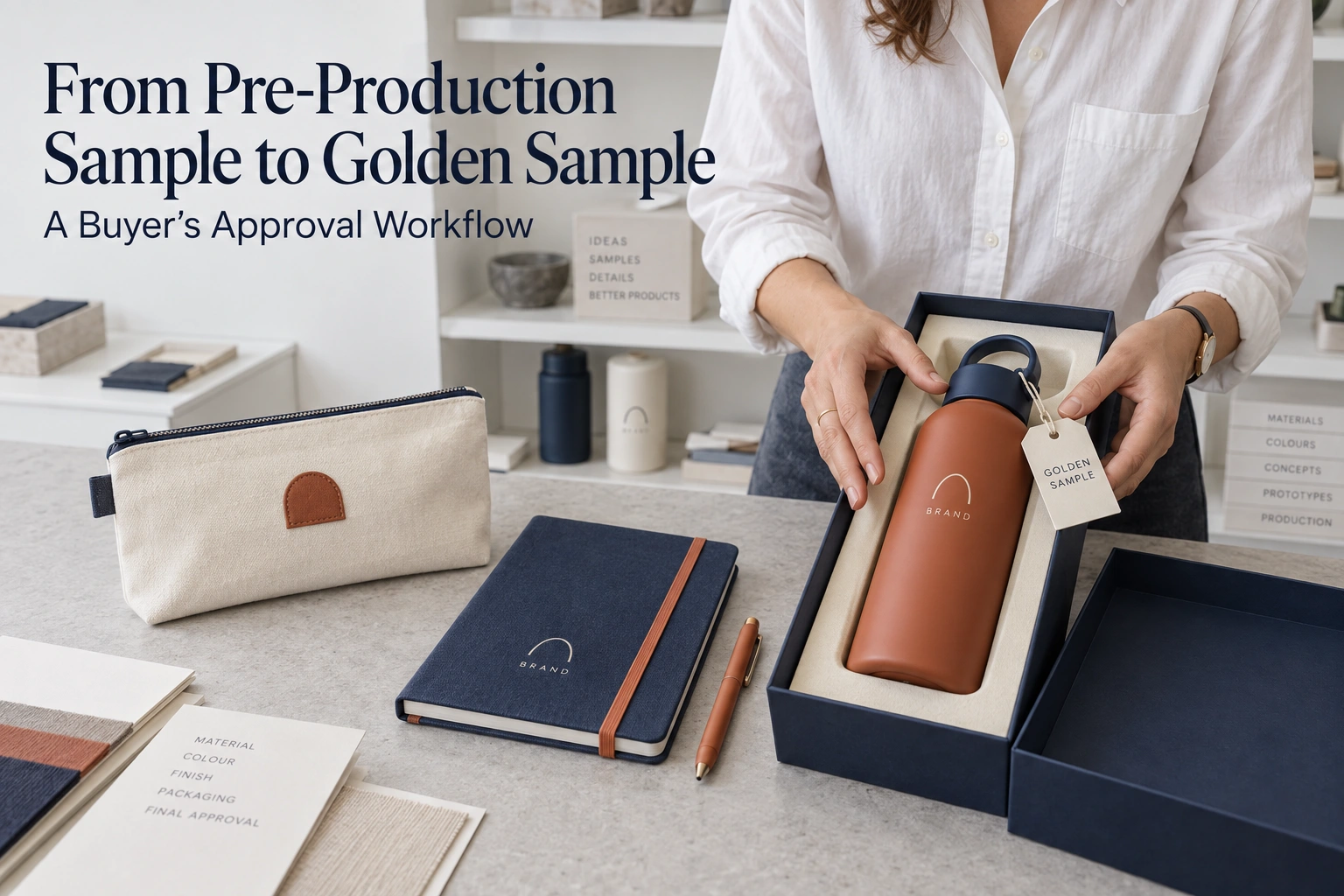
A promotional product sample approval process should move through a defined sequence of approval gates — digital mockup, pre-production sample, production-run verification, and a final golden sample sign-off — with each gate confirming a specific aspect of the order before the next stage proceeds. This guide is written for procurement managers sourcing branded merchandise for mid-market and enterprise programs in US and UK markets, running this workflow with a shortlisted supplier before a bulk production run is authorized. It assumes the buyer already has an approved product specification and is deciding how to structure sample review, not which supplier to select. The golden sample, once approved, becomes the retained physical reference for that program, including any future reorders.
Preserving the approved reference is not automatic — a sample can be lost, damaged, or miscommunicated between teams, silently shifting what “approved” means by the time of a reorder. The sections below provide a decision table comparing sample types, the approval gates in this workflow, a repeatable framework with a named decision owner, a golden sample preservation checklist, and an illustrative example of where a real approval workflow caught an issue before bulk production.
Figures, timelines, and outcomes used as examples in this article are illustrative only. Confirm actual sample rounds, tolerances, and storage terms directly with your supplier for your specific product and program.
Why a Structured Sample Approval Process Matters
Without a defined process, sample approval tends to happen informally — an email thread, a photo sent over chat, a verbal “looks good.” That works until a reorder six months later, when nobody can say with certainty what was actually approved the first time, or a new supplier contact interprets an old approval differently than the original team did.
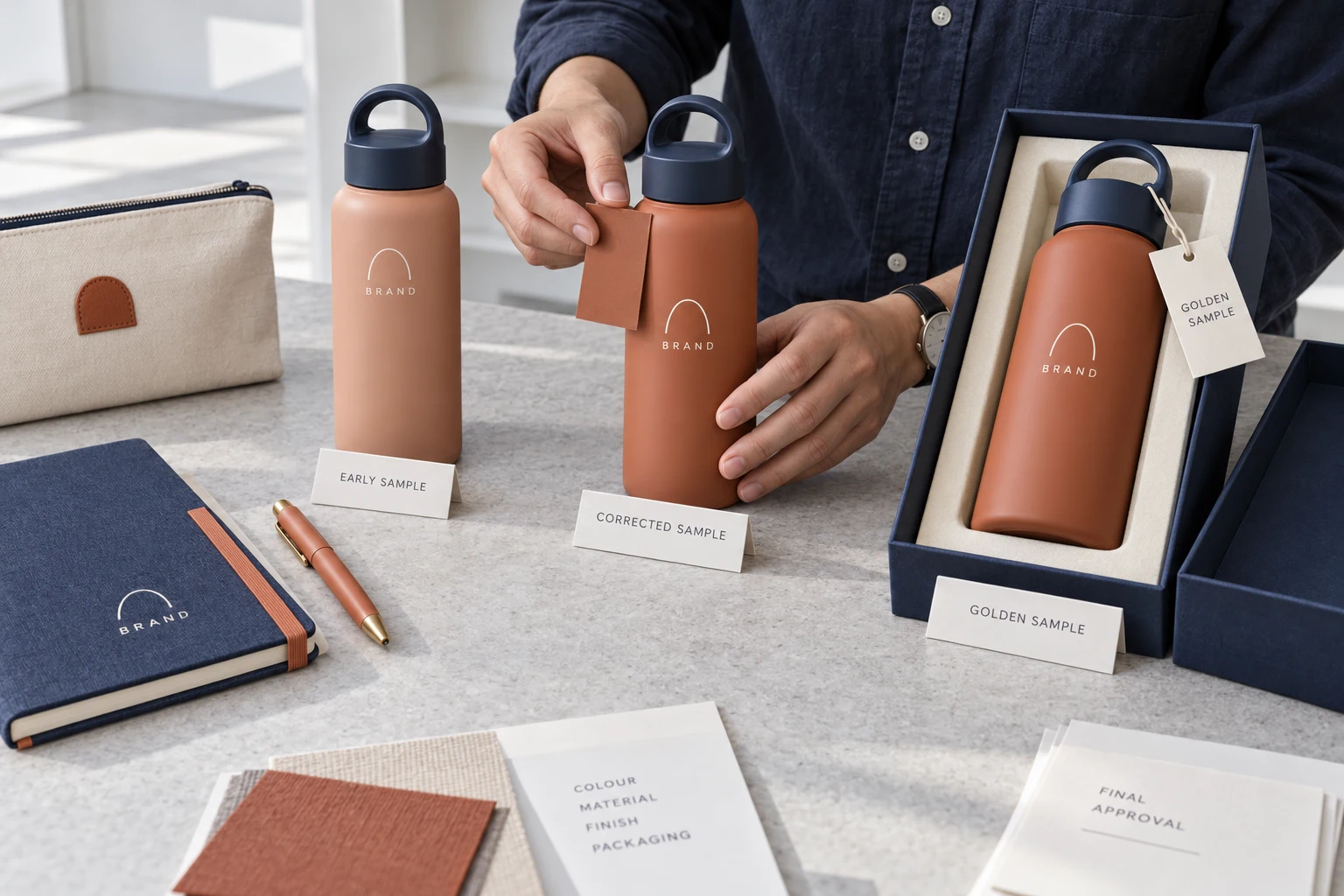
A structured promotional product sample approval process fixes that by defining what each stage confirms, who approves it, and what physical or documented reference survives the process. The golden sample — the final, retained reference — is the output of that process, not just the last sample a supplier happened to send.
Decision Table: Sample Types and What Each One Confirms
Different types of evidence confirm different things. Use the table below to match the right sample type to the right stage of your approval process.
| Sample type | What it confirms | When to use it | Risk if skipped |
| Digital mockup | Approximate branding position, scale, and layout | Early concept review, before committing to physical samples | Relying on it alone risks material or color surprises later |
| Stock sample | General material, construction, or function of an existing item | Evaluating a supplier’s base product before customization | Does not confirm your specific branding or customization |
| Pre-production sample | Your branding, material, and construction combined in one physical unit | Before committing to a bulk production run | A full production run built on an unverified combination |
| Production-run sample | Whether actual bulk output matches the approved reference | During or immediately after the first production run | Undetected drift between the approved reference and real output |
| Golden sample | The final, retained reference against which all future output is measured | After final approval, kept for the life of the program | No fixed reference for resolving future quality disputes or reorders |
Approval Gates: What Each Stage Should Confirm
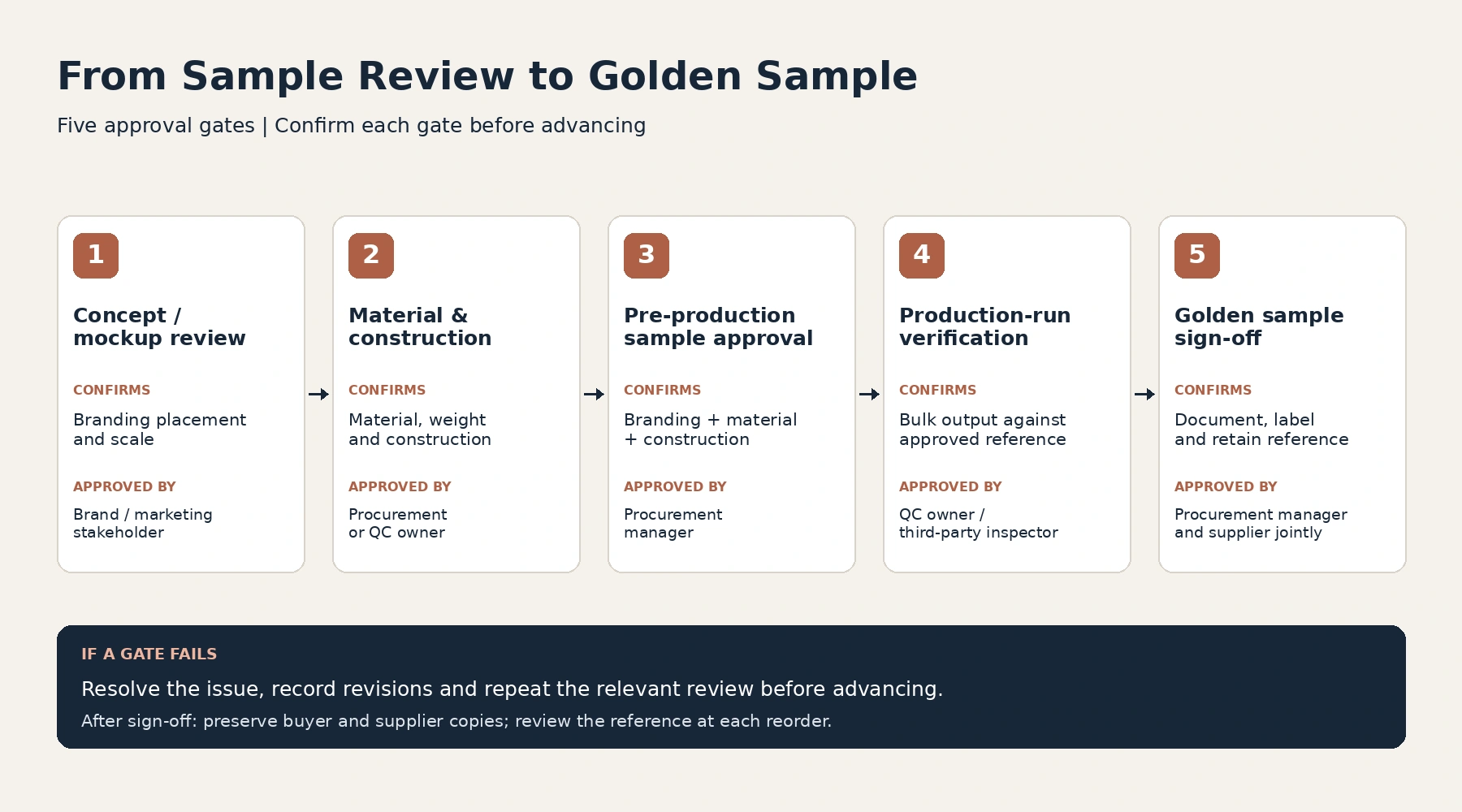
The five gates below make up the approval workflow. Each gate has its own owner and its own criteria — moving to the next gate without formally closing the previous one is where most golden sample disputes start.
| Gate | What it confirms | Who approves | If it fails |
| Concept / mockup review | Branding placement and scale look correct on a digital layout | Brand or marketing stakeholder | Mockup is revised before physical sampling begins |
| Material & construction review | Material, weight, and construction match the specification | Procurement or QC owner | Supplier resubmits with corrected material or documentation |
| Pre-production sample approval | Branding, material, and construction match approval criteria in one physical unit | Procurement manager (decision owner) | Supplier revises and resubmits before bulk production is authorized |
| Production-run verification | Actual bulk output matches the approved sample within stated tolerances | QC owner or third-party inspector | Production is paused pending root-cause review and correction |
| Golden sample sign-off | The final reference unit is documented, labeled, and retained by both parties | Procurement manager and supplier, jointly | Reorder or dispute resolution proceeds without an agreed reference |
The Buyer’s Sample Approval Workflow, Step by Step
The steps below turn the five gates into a repeatable workflow, with a clear decision owner — typically the procurement manager running the sourcing decision. This process is genuinely procedural, so it is a candidate for HowTo structured data if published as a standalone how-to page.
- Request a digital mockup before committing to any physical sample, and approve branding placement and scale first.
- Request a pre-production sample that combines your approved branding with the actual material and construction — this is where most real issues surface.
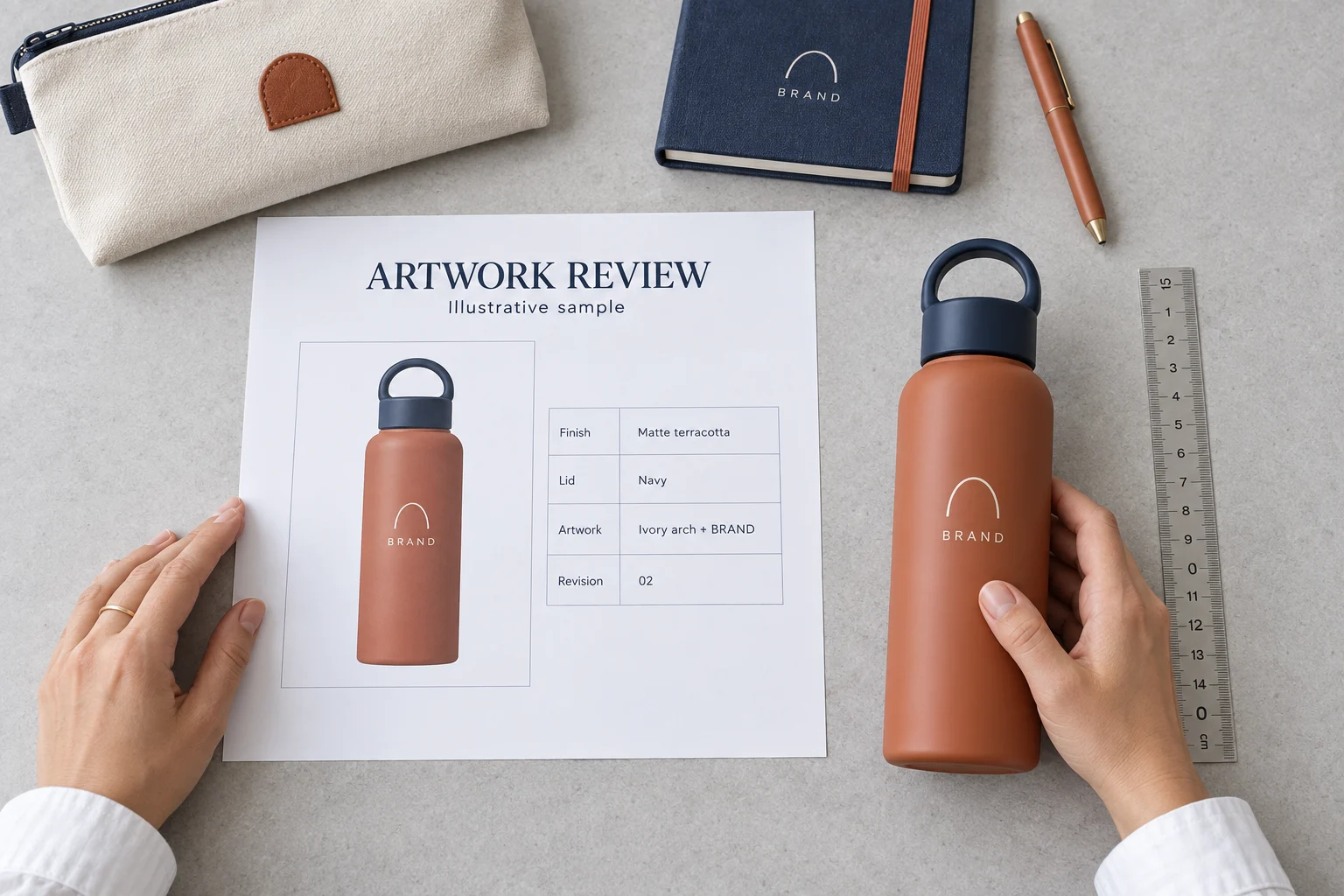
- Compare the pre-production sample against your original specification field by field, not just visually.
- Approve or reject the pre-production sample in writing, with specific revision notes if it is rejected.
- Request a production-run sample once bulk production begins, to confirm actual output matches the approved reference.
- Formally sign off on the golden sample once production-run verification passes, and document how it will be preserved.
- Store the golden sample under the preservation checklist below, and reference it — not memory or photos alone — for every reorder.
Our team can help manage this approval workflow as part of a scoped sourcing engagement — see promotional product sourcing for how we support procurement teams through sample approval.
How to Preserve the Golden Sample as the Production Reference
Approval is only half the workflow. The table below covers how to preserve the golden sample so it remains a reliable reference for future production runs and reorders.
| Preservation method | What to do | Why it matters |
| Physical storage | Store the sample in stable, agreed conditions — away from direct light and temperature extremes | Prevents material degradation that could create false quality disputes later |
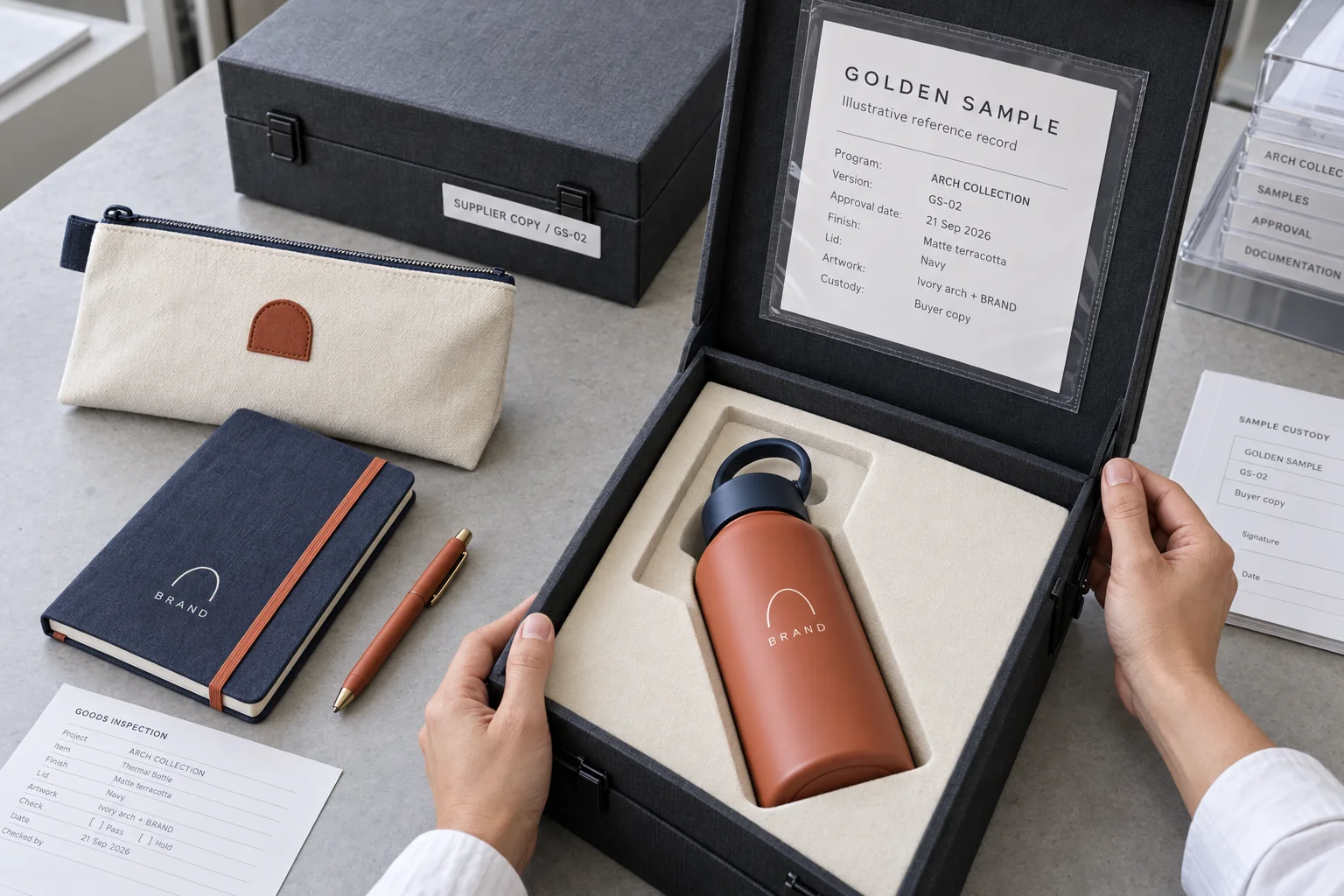
| Dual custody | Keep one reference copy at the buyer’s facility and one at the supplier’s facility | Ensures both parties are measuring against the same physical standard |
| Documentation | Photograph and log dimensions, color codes, and material specification alongside the physical sample | Provides a backup reference if the physical sample degrades or is lost |
| Labeling | Label the sample with program name, approval date, and version number | Prevents confusion with earlier rejected samples or later product revisions |
| Access control | Restrict who can approve a deviation from the golden sample | Prevents informal, undocumented changes to the production standard |
| Renewal review | Reassess the golden sample’s condition and relevance at each reorder | Confirms the reference is still usable and still matches current requirements |
Roles and Responsibilities in the Approval Workflow
Assigning a clear owner per gate is what keeps the workflow from stalling on an unclear handoff between teams.
| Role | Responsibility |
| Procurement manager (decision owner) | Owns the overall approval timeline and the final sign-off decision |
| Brand or marketing stakeholder | Approves branding placement, scale, and visual accuracy at the mockup and sample stages |
| Quality / QC owner | Verifies material, construction, and production-run conformance against the approved sample |
| Supplier’s account contact | Coordinates sample production, revisions, and documentation on the supplier’s side |
| Legal or compliance (as needed) | Confirms compliance documentation before the pre-production sample is approved for bulk production |
Evidence From the Field: Illustrative Approval Example
The example below is an illustrative sample approval scenario created to show how the workflow catches an issue before bulk production. Replace the sample details with your own verified project records before presenting this as a real case study.
A procurement team runs a branded drinkware program through this workflow with a shortlisted supplier.
| Approval stage | Illustrative finding | Resulting action |
| Digital mockup review | Logo placement approved with no changes requested | Proceeded to pre-production sampling |
| Pre-production sample | Color did not match the approved reference | Supplier issued a corrected sample before bulk production was authorized |
| Production-run verification | Bulk output matched the corrected pre-production sample within agreed tolerance | Production released for shipment |
| Golden sample sign-off | Reference unit documented and retained by both parties | Used as the standard for the program’s first reorder |
In this illustrative scenario, the color mismatch caught at the pre-production sample stage was corrected before it reached bulk production. The retained golden sample later gave both the buyer and the supplier a fixed reference at reorder, rather than relying on memory or a photo from the original approval.
Risks and Limitations of This Approval Process
- A golden sample confirms physical and visual conformance at one point in time; it does not guarantee identical output on every future run without ongoing production QC.
- Material properties can shift over time even under controlled storage, which can create disputes if the golden sample itself degrades.
- This workflow adds time to the sourcing timeline; buyers with very short lead times should confirm how many approval rounds are realistic before committing to a launch date.
- Approval criteria are only as strong as the specification they are measured against; a vague original spec weakens every gate that follows.
- Dual custody of the golden sample depends on both parties actually preserving their copy; confirm this in writing rather than assuming it happens by default.
- The approval example in this guide is illustrative; actual timelines and outcomes vary by product, supplier, and category.
Request a Scoped Quote
If you are setting up a sample approval process for an upcoming program, share your product specifications, quantity, branding, and required delivery date. Our team can help structure this workflow as part of a scoped quote.
Prefer a lighter first step? Send us your current sample or mockup for a documentation and specification review before you move to pre-production sampling.
Frequently Asked Questions
How many pre-production sample rounds should we expect?
There is no universal number; it depends on product complexity and how precisely the original specification was written. Building at least one revision round into your promotional product sample approval process by default, rather than assuming first-round approval, tends to be more realistic for most branded merchandise programs.
Who should physically keep the golden sample?
Both parties, where practical. Dual custody, as shown in the preservation checklist above, protects against loss or damage on either side and ensures buyer and supplier are always referencing the same physical standard. This can also support vendor evaluation by establishing clear responsibilities for sample control.
What happens if the golden sample is lost or damaged?
This is why documentation matters alongside the physical sample: photographs, measurements, and material specifications logged at approval time can support a reconstructed reference, though they are not a full substitute for the physical unit itself. Keeping these records is also an important part of supplier due diligence.
Does every order need a golden sample, or just new programs?
A new program or a new supplier relationship should always produce one. A straightforward reorder of an existing, already-approved product may not need a new golden sample, provided the original is still available, documented, and unchanged. This approach can be included in the procurement process to define when new approval is required.
How does the golden sample process relate to compliance documentation?
Compliance documentation should be confirmed before the pre-production sample is approved, not after, since a compliance gap found later can invalidate an otherwise-approved reference. As part of the promotional product sample approval process, see our promotional product compliance resource for what documentation to request.
Sources and Further Guidance
US Consumer Product Safety Commission — Children’s Product Certificate
California OEHHA — Proposition 65 Frequently Asked Questions for Businesses
UK Government — Placing Manufactured Products on the Market in Great Britain
Google Search Central — Creating Helpful, Reliable, People-First Content
Author & Reviewer
Written by Claire Morgan, Senior Content Writer, with professional experience managing sample approval workflows for branded merchandise programs.
Freshness & Update Log
- Published: September 21, 2026
- Last Reviewed: September 21, 2026
- Next scheduled review: within 12 months, or sooner if referenced regulatory guidance changes.
Related Resources
- /promotional-product-sourcing/ — primary commercial page: request a scoped quote and sourcing review.
- /questions-to-ask-a-promotional-product-supplier/ — 18 evidence-based questions to ask once quotes are in hand.
- /promotional-product-supplier-audit-checklist/ — the 25-point checklist for auditing a supplier before you award the order.